Let’s be honest. Most diets don’t fail because you lack willpower. They fail because you misunderstand the math.
You lose the weight. You hit your goal. Then life happens. You stop counting every single almond. You go back to your normal eating habits. And within months, you’re back to where you started. Maybe even heavier.
It feels like a personal failure. It isn’t. It’s basic physics.
If you want to keep the weight off, you need to change the equation. And for many people, that means moving their bodies in a way that doesn’t destroy their joints. That’s where a good elliptical machine review becomes essential reading before you spend money.
The Calorie Math You Skipped in School
Here is the simple truth about your body: it is a furnace. It burns fuel just to exist.
For every pound of body weight you carry, your body needs about 12 calories per day just to stay alive. This is your basal metabolic rate for that specific mass.
Let’s look at a real example. Say you weigh 150 pounds.
150 pounds times 12 calories equals 1,800 calories.
So, if you eat exactly 1,800 calories a day, you stay at 150 pounds. You neither gain nor lose. You are in equilibrium.
Eat more than 1,800? The surplus turns into fat. It takes roughly 3,600 excess calories to create one extra pound of body fat.
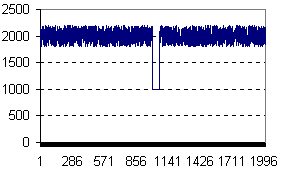
Now imagine you decide to eat 2,000 calories a day. That’s just 200 extra calories. Does that seem like a lot? Not really. A slice of pizza. A large latte. A handful of chips.
But 200 calories a day adds up. Over time, you gain weight. And as you gain weight, your body gets heavier. And a heavier body needs more energy to function.
You will eventually hit a new equilibrium.
If you eat 2,000 calories a day, you won’t keep gaining weight forever. You’ll stabilize. How heavy?
2,000 divided by 12 equals about 166.67 pounds.
So if you eat 2,000 calories daily, you will naturally settle around 167 pounds. Your body adapts. It demands more fuel because it has more mass to support.
The Crash Diet Trap
This is where most people get stuck.
Let’s say you’re at that new equilibrium of 167 pounds. You hate it. You want to be 150 again.
So you go on a crash diet. You slash your intake to 1,000 calories a day for 60 days.
You lose weight. Fast. In two months, you drop 16 pounds. You hit your target. You feel amazing. You buy new jeans. You take selfies.
Then you stop the diet.
You go right back to eating 2,000 calories a day.
Here is the problem. You are no longer 167 pounds. You are 150 pounds.
But your appetite? Your habits?
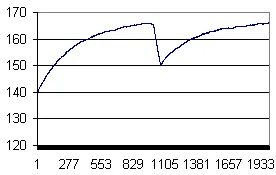
You drop the pounds. It feels like magic. Then you go back to eating how you usually do. The weight returns. Faster than you thought possible.
Why does this happen? It’s basic arithmetic, not just willpower. When you are at your lightest, your body demands less fuel. You might only need 1,500 calories to maintain that new weight. If you go back to eating 2,000 calories a day, you are suddenly in a surplus. That surplus adds up quickly.
Compare that to being heavier. If you needed 1,800 calories and ate 2,000, the surplus is smaller. The weight gain is slower. But at the lower weight, that same 500-calorie excess hits harder. You gain mass each day because your baseline energy needs have shrunk.
This is why the yo-yo effect feels so brutal. The scale doesn’t lie. It just reflects the math of your metabolism.
So, how do you break the cycle? There really are only two paths.
Change Your Baseline Intake
You have to accept that your “normal” eating pattern before the diet was too much for your current body size. You cannot eat your old high-calorie habits and expect to stay at your new low weight.
The fix? Adjust your daily average. You need to take in fewer calories on average than you did before you started. This isn’t about starving yourself. It’s about recognizing that your body is smaller now. It needs less food. If you keep eating the same volume, you are feeding a body that no longer exists.
Move More to Burn the Difference
The second option is to offset the surplus. If you aren’t going to change what you eat, you must change what you do. Start exercising.
Exercise burns those extra calories you are taking in. It creates a buffer. If you eat 2,000 calories and burn 500 through movement, the impact on your weight is less severe than if you sit still. But exercise alone is often harder to sustain than dietary changes. It’s easier to not eat a slice of cake than to run three miles to “earn” it.
The Combination Works Best
Relying on just one method is risky. Cutting calories without moving can slow your metabolism further. Moving without cutting calories can feel like a never-ending treadmill.
The most effective strategy is a combination. Lower your overall calorie intake to match your new, lighter body. Add consistent movement to burn off the excess. This dual approach addresses both sides of the energy equation. It stops the rapid rebound and keeps the weight off for good.
For more on the biology behind these shifts, look into how fat cells store energy and how exercise impacts calorie burn. Understanding the mechanism helps you fight it effectively.
Related Reading
- How Dieting Works
- How Calories Work
- How Fat Cells Work
- How Fats Work
- How Exercise Works
- How the Obesity Paradox Works
More Great Links
- Weight Control