It looks like something ripped straight from a horror script. A ribbon-like, wriggling creature. It lurks inside a host, siphoning nutrients and depositing millions of eggs. Some can stretch to 80 feet. They can stick around for three decades. If the thought of a parasitic tenant doesn’t make you shudder, wait until you hear about their reproduction.
Fortunately, most of us in developed nations won’t wake up with a tapeworm. These infections are tightly linked to poor sanitation. It’s often about hand washing. Or bathing. Or lacking proper disposal for human and animal waste. Contaminated fecal matter ends up in the mouth. Livestock exposure increases the risk.
Food preparation matters, too. Undercooked or raw meat is a common vector. Tapeworm eggs survive the process. They don’t get killed off. That rare steak? You might want to reconsider.
Yet, despite the visceral revulsion, some have tried to weaponize this parasite. The idea: intentional ingestion for weight loss. Tapeworm pills were allegedly sold as diet aids in the past. The logic seems twisted but simple. Eat everything. Let the worm absorb the calories. The fat stays away. Right?
We need to talk about that. There are myths swirling around this bizarre topic. We’re going to untangle them. How do you actually get infected? How does it leave the body? Did an opera singer lose her girth—and maybe her voice—by swallowing one? How much weight can a tapeworm really help you lose? Let’s look at the facts, not the fiction.
Understanding Tapeworm Transmission
Getting a tapeworm isn’t usually a choice. It’s often an accident of hygiene or food safety. The primary route is ingesting eggs from contaminated sources. Poor hand hygiene plays a huge role. Fecal matter transfers to hands. Then to food. Then to mouth.
Livestock exposure adds another layer of risk. Farms without proper waste management are hotspots. But you don’t need to be on a farm. You just need to eat contaminated food. Raw meat is a major culprit. Undercooked meat doesn’t kill the eggs. Or the larvae. They survive cooking.
This is why food safety isn’t just about taste. It’s about health. Avoiding undercooked pork, beef, or fish reduces your risk. Proper cooking temperatures matter. Freezing meat at specific temperatures for set periods can also kill parasites. But relying on home freezers isn’t always reliable.
The idea that tapeworms are a viable weight loss tool ignores these transmission realities. You can’t just “get” a tapeworm safely. It requires exposure to contamination. Or consuming infected meat. There’s no safe pill. No guaranteed source. Just risk.
“Ingesting undercooked or raw meats also put people at risk because any tapeworm eggs present in the food doesn’t get killed off during the food preparation process.”
The Weight Loss Myth Debunked
The theory sounds tempting. Starve yourself without trying. Let a parasite do the work. But does it work? And at what cost?
Tapeworms do absorb nutrients. That’s their survival mechanism. They steal calories from their host. But the amount of weight lost is unpredictable. Small worms? Negligible impact. Large worms? Maybe some loss. But the health risks skyrocket.
Let’s be clear about what you are putting into your body when you buy those “natural” weight loss drops. A tapeworm isn’t a magic metabolic booster. It is a parasite. Period. It doesn’t have its own digestive system to process food. Instead, it floats in your intestines and soaks up the nutrients your body has already broken down. Mostly carbohydrates and sugars. You eat. It drinks your dinner.
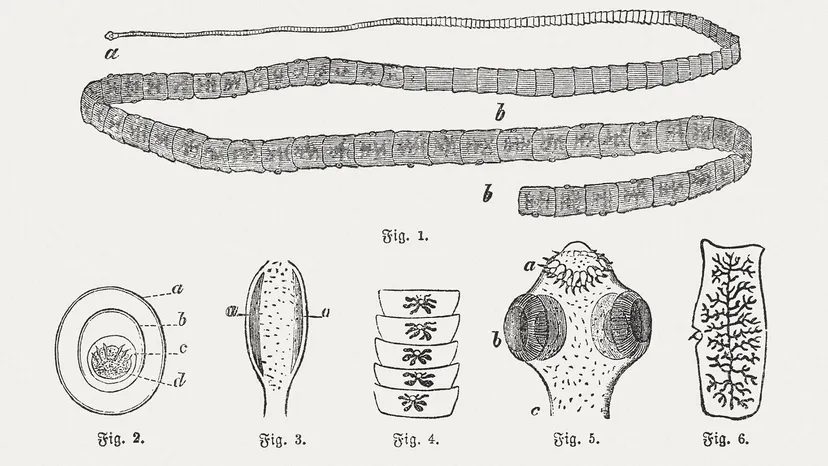
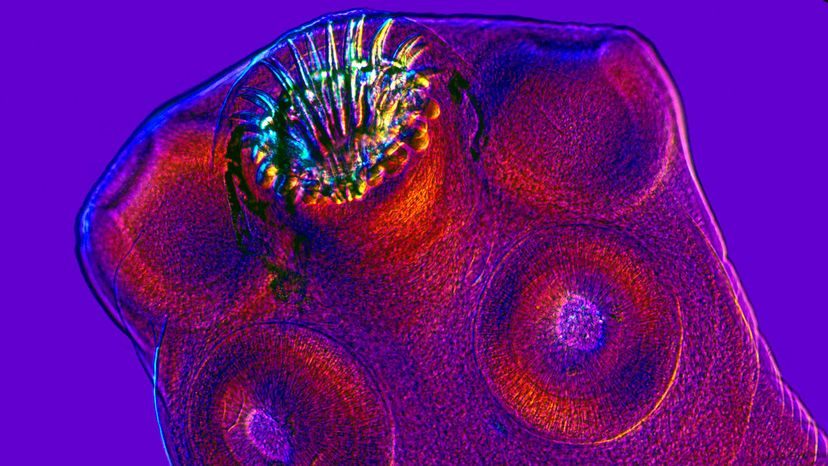
The adult worm lives in the gut of a host. That host could be a pig, a cow, a dog, or you. Different species prefer different hosts, but most can jump between types. At the very top is the head, or scolex. This isn’t a cute little face. It has suckers and hooks designed to latch onto your intestinal wall. Without that grip, the peristaltic action—the rhythmic muscular contractions that move food through your tract—would simply squeeze the worm out.
Below the scolex is the neck. The rest of the body buds off from there.
This is where biology gets grotesque. The body, called the strobila, is made of segments. Thousands of them. Each segment is a proglottid. They are either male or female. The ones near the neck produce sperm. The ones further down are essentially egg sacks. A single tapeworm can churn out millions of fertilized eggs. One segment alone holds about 100,000 eggs.
These segments frequently break off. They pass out of the host in feces. But here is the twist: each proglottid has functional muscles. It can crawl. Sometimes a detached segment wriggles out of the anus on its own. More often, it crawls away from the fecal pile to increase the odds of being eaten by another animal. Eventually, the segment disintegrates, releasing the eggs.
When an herbivore eats those eggs, the harsh conditions of its digestive system “hatch” them. The larval stage, a hexacanth, uses hooks to burrow through the intestinal wall and into the bloodstream. There, it forms a cyst. This condition is called cysticercosis. Pigs, cows, and sheep get it most often. But humans can act as intermediate hosts for the pig-born species, meaning we can contract cysticercosis too.
Once the cysts form, the parasite just waits. It sits there. When the host animal dies, the meat might be eaten raw or undercooked by other animals or humans. The ingested cysts move into the new host’s digestive system. The scolex attaches to the wall. The cycle restarts.
If you end up with an adult tapeworm, you have human taeniasis. On its own, this is often asymptomatic. You might not feel a thing. But it can develop into cysticercosis. That is when the hexacanths burrow into your bloodstream. That is not pleasant.
The cysts can end up almost anywhere. Eyes. Brain. They grow. They inflame the surrounding tissue. The pressure causes temporary symptoms or permanent damage. Blindness. Brain damage. Death in extreme cases. In developing countries, it is the leading cause of adult-onset seizures. It is far more likely if you live with someone who already has a tapeworm.
The digestive system can also take a hit if the worms get huge. They can block the appendix, bile ducts, or pancreatic ducts. Cysts can grow in the lungs and liver. If they get large enough, they disrupt organ function. Occasionally, a cyst ruptures. That causes itching. Hives. Trouble breathing. Swelling that looks exactly like a severe allergic reaction.
Tapeworm Symptoms and Prevention
Let’s be clear: you do not need to intentionally acquire a tapeworm. If you’ve read the previous parts and decided that living with a parasitic roommate is not on your list, here is how you keep them out of your life entirely.
Hygiene is your first line of defense. Wash your hands. Not a quick rinse, but a thorough scrub with soap and warm water after using the bathroom and before you touch any food. It sounds basic, but this simple habit drastically reduces your risk of becoming an unwitting host.
In the United States, you are largely protected by the food supply chain. Meat inspections are designed to keep tapeworms out of what you buy at the grocery store. If you know what to look for, you can spot cysts in the meat. They are visible to the naked eye.
Still, caution pays off. Freezing meat at minus 31 degrees Fahrenheit (or -35 degrees Celsius) for ten days kills any parasites hiding inside. It’s a reliable kill switch for larvae.
When it comes to cooking, resist the urge to order your steak rare. You need to cook meat to a safe temperature to destroy larvae and eggs. Use a food thermometer. Do not guess. For whole cuts of meat (poultry is a different beast), aim for a minimum of 145 degrees Fahrenheit (63 degrees Celsius). Then, let it “rest” for at least three minutes before you cut into it. That resting period matters. The residual heat continues to kill pathogens even after the meat is off the heat source.
Ground meats are different. Cook them to 160 degrees Fahrenheit (71 degrees Celsius). You do not need a resting period for ground meat because the surface area was exposed during processing, and you are cooking it uniformly anyway.
Travel Risks and Water Safety
If you are traveling to or living in a developing region, the rules change. Take extra precautions. Use safe water to wash and cook all vegetables and fruits. If you are unsure about the water quality, boil it for one minute and let it cool before drinking or using it in food preparation.
Also, avoid contact with animal and human feces. This is particularly important if you are in a livestock-relevant situation. Proper disposal is key. It is not just about cleanliness; it is about breaking the cycle of transmission.
When to Worry
Tapeworm infections often give off no symptoms at all. Many people carry them without knowing. But if you notice weakness, nausea, abdominal pain, diarrhea, dizziness, loss of appetite, weight loss, or even a strange craving for salt, it is worth a visit to the doctor. You need to be assessed for a possible intestinal infection.
Usually, a stool sample will be checked for tapeworm segments or eggs. It is a straightforward test.
Signs of a more serious, invasive infection are different. Headaches, allergic reactions, seizures, other neurological symptoms, and cystic lumps under the skin indicate that the parasite has moved beyond the intestine. These are medical emergencies.
Treatment and Myths
Ideally, such an event is caught long before it gets too serious. When caught early, it can be handled quickly by a single dose of anti-worm medications like niclosamide or praziquantel. These drugs work by forcing all of the parasite’s muscles to contract permanently. The tapeworm cannot hold on. It leaves your body along with your feces.
Severe cases may require surgery. But that is rare if you act early.
Weight Loss and Other Tapeworm Myths
The idea that tapeworms are a magic weight-loss solution is a myth rooted in danger, not science. Losing weight this way is not a diet strategy; it is a symptom of disease. It comes with pain, nutritional deficiencies, and the risk of severe complications. There is no healthy version of this. No, you should not try it.

The Milk and Cookie Myth, Debunked
Let’s bust the most persistent tapeworm legend right out of the gate. You’ve probably heard that you can coax the parasite out by leaving a bowl of milk and cookies near your face. It sounds like something from a cartoon, but it is scientifically impossible.
A tapeworm lives deep in your intestine. By the time food reaches that point, it has already passed through your stomach and esophagus. But here is the real kicker: tapeworms lack sensory organs. They cannot smell. They cannot see. They are simple creatures, essentially living sacs of reproduction, with no brain or nerves to detect the aroma of vanilla or the sight of chocolate.
This logic applies to the other end of your digestive tract as well. Shoving food near your rectum won’t draw them out either. If you suspect you have a tapeworm, the only move is to take the prescribed medication. Let nature handle the rest.
The Maria Callas Connection
Then there is the story of opera diva Maria Callas. Rumor has it she swallowed tapeworms in the mid-1950s to shed the weight required for her dramatic roles. The math checks out partially. Callas did lose over 60 pounds (27 kilograms) in a few months. She was also diagnosed with a tapeworm infection at some point in her life.
But linking the two is likely a case of historical coincidence turned gossip. Callas had a taste for rare steak, which is a common vector for tapeworms. She probably acquired the parasite accidentally, not intentionally for weight loss. The two events got tangled together in the press and stuck. It’s a seductive narrative, but probably not the truth.
Were “Sanitized Tapeworms” Ever Sold?
History offers a darker, stranger clue. From the late 19th to the early 20th century, there was advertising for “sanitized tapeworms” sold to women who wanted to stay slim. The pills claimed to contain the cyst stage of the tapeworm life cycle.
Did these pills actually work? Or were they just placebo capsules? It’s difficult to verify. Cultivating a supply of tapeworm cysts sounds like a gruesome, unsanitary operation. It seems unlikely that legitimate pharmaceutical companies were mass-producing living parasites.
However, the answer to “did anyone ever try this?” is almost certainly yes. Somewhere, in the long, strange timeline of human desperation, someone ingested a tapeworm hoping for a waistline change. It was never widespread, but it happened.
What Actually Happens to Your Body
So, what is the physiological reality of hosting a tapeworm? Do the pounds just vanish? Can you eat junk food all day with no consequences?
No. Tapeworms are not vacuum cleaners for calories. They are not large enough to absorb all the energy from your diet. If you are already eating very little, the worm might steal enough nutrients to cause malnutrition. If you are eating normally, the tapeworm’s caloric impact is negligible. You will likely pack on pounds from the carbs anyway.
Most infections are asymptomatic. You might not know you are infected until you see a proglottid (a segment of the worm) in your toilet bowl. That is your body’s way of saying, “Hey, there’s a problem here.”
The Hidden Costs of Weight Loss
Some people with tapeworms do experience intestinal discomfort, diarrhea, or a reduced appetite. A smaller appetite can lead to weight loss. But let’s be honest: reading about tapeworms alone can kill your appetite. You might not need drastic measures.
Even if the worm trims some fat, the trade-off is terrible. The primary goal of weight loss is usually to feel or look better. A tapeworm steals vital nutrients, specifically vitamin B12. You might become thinner, but you will also become anemic, fatigued, and sickly. No one is impressed by a pale, lethargic silhouette.
Then there is ascites. This is a serious condition where the body’s immune response to the parasite causes fluid to build up in the abdominal cavity. Your belly swells and distends. It is the exact opposite of the flat stomach you were aiming for.
The Long-Term Risks
And we have not even touched on cysticercosis. This is a severe complication where tapeworm larvae form cysts in various tissues, including the brain. The consequences can include seizures, blindness, and death.
Given the risk of brain damage and the likelihood of a bloated belly, using a tapeworm as a diet aid is a terrible idea. If you want to lose weight, the old advice still holds. Eat less. Move more. Ride your bike.