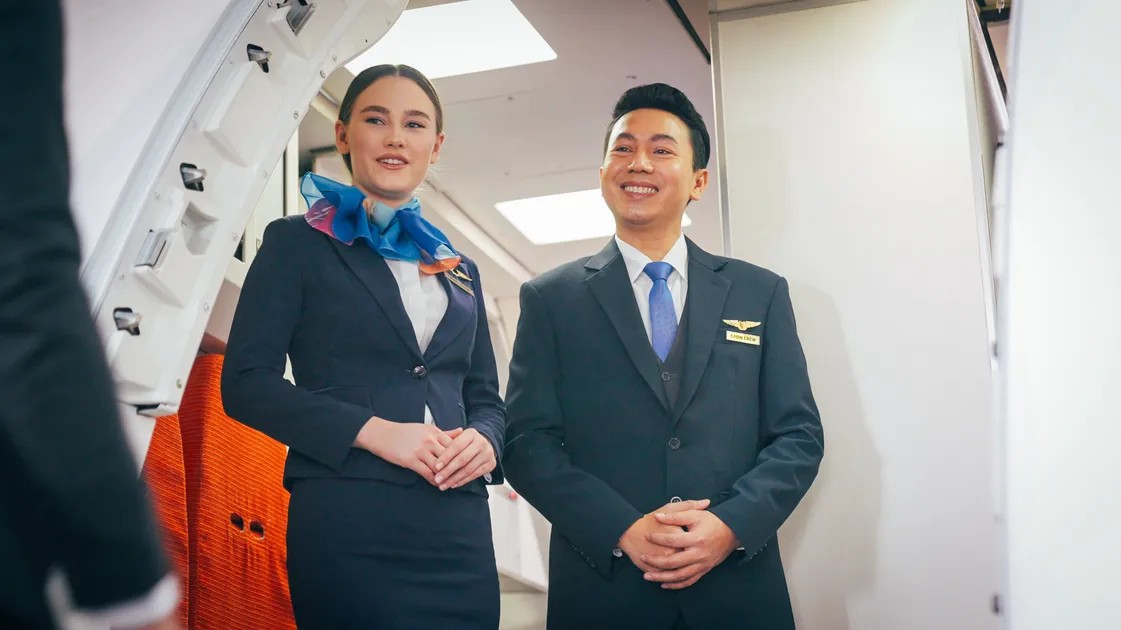
It feels like a simple courtesy. You walk up the jet bridge. A uniformed crew member stands at the door, smiles, and says, “Welcome aboard.” They might glance at your boarding pass. It’s the aviation equivalent of a maître d’ welcoming you to a restaurant.
Don’t be fooled.
That brief interaction is a high-stakes security scan disguised as hospitality.
“The smile and greeting you get at an airline door is probably one of the most judgmentful welcomes you’ll ever receive,” Jay Robert told HuffPost. Robert is a senior flight attendant and founder of A Fly Guy Travels. “We’re judging a lot. And that judgment? It’s part of our job.”
It isn’t malice. It’s safety.
The First Line of Defense
Greeting passengers at the aircraft door serves as the initial screen for threats. The goal is to identify risks before they enter the pressurized tube.
“We’re constantly scanning for illness, intoxication, or prohibited dangerous goods,” Robert said. Any of those factors can disrupt the flight or endanger everyone on board.
It’s also an operational necessity.
“The greeting is a behavioral assessment,” said Anton Radchenko, founder of AirAdvisor. He explained that the social framing is deliberate. Passengers relax when they feel welcomed. Crew members use that openness to read orientation, steadiness, and potential liability in a confined space at altitude.
Why Sobriety Checks Matter at Boarding
Unruly passenger behavior is rising. And alcohol is often the fuel.
Flight attendants assess sobriety the moment they see you. If you look drunk, high, or disoriented, the dynamic changes instantly.
“Generally, flight attendants assess passengers for sobriety during boarding,” Henry Harteveldt explained. He is an airline industry analyst for the Atmosphere Research Group. If a passenger appears impaired, the crew might ask to see a boarding pass. The pretext is directions to the seat. The real purpose? Alerting other crew members to monitor that person’s intake once seated.
Catching this early is cheaper than dealing with it in the air.
Dan Bubb, a former pilot, pointed out the logistics of a diverted flight. You don’t want a belligerent drunk at 35,000 feet. That requires a diversion. It costs money. It wastes time.
“It’s much easier to stop someone at door than to remove them once they’re settled in,” Robert said. Crew communicate constantly. If Robert spots a suspect at the front, he’ll radio the back of the plane for a second opinion.
The Legal Shield of Crew Discretion
Getting it wrong carries weight. Legal exposure for carriers is significant if an impaired person flies.
“By the time a passenger reaches the door, gate agents have already screened them,” Radchenko noted. If the crew flags you at the gate, the carrier now has two documented grounds to deny boarding.
The power balance favors the airline. Aviation law assumes the crew is right regarding safety decisions. To challenge a denial, a passenger must prove the decision was arbitrary—not just that they were uncomfortable.
If you believe you’re being wrongfully denied entry? Ask for a written reason. That document is the baseline for any claim.
Physical Signs of Illness and Impairment
Flight attendants look for physical cues people try to hide. Robert mentioned clammy skin. Pale complexions. Excessive sweating. Visible contagious skin conditions.
Passengers often try to mask being unwell. Crew have to use every bodily clue to decide if travel is safe.
Scent is another indicator.
“We’re checking for alcohol but also offensive body odor,” Robert added. BO is a strict no-go. It affects the comfort and well-being of the entire cabin. Airlines retain the right to refuse carriage for excessive odor.
Slurred speech, confusion, or inability to maintain balance are red flags. These signs of impairment trigger immediate scrutiny.
Baggage, Trafficking, and Exit Rows
The assessment extends beyond the person to their belongings.
Crew members check carry-ons for size and quantity compliance. They identify bags that need gate-checking. But they also scan for dangerous items.
In recent years, the role has expanded to include human trafficking awareness. Crew around the world now train to recognize indicators of trafficking. They know how to discreetly report concerns.
“Looking for potential signs of human trafficking” is now part of the boarding protocol. Robert emphasized that this adds another layer to the safety net.
Identifying Able-Bodied Passengers (ABPs)
There’s a flip side to the screening. Crew members are also looking for assets.
In an emergency, someone needs to help. That’s where ABPs come in—Able-Bodied Passengers.
“We’re identifying passengers who may assist in an emergency,” Paula S. Adams said. She’s a former Etihad crew member and aviation trainer.
Robert elaborated on who they look for. Someone physically capable. Law enforcement. Military personnel. Firefighters. Medical professionals. Or just a confident, strong individual.
The FAA requires verbal briefings for exit-row passengers. Crew members must confirm passengers understand their role. They must verify sobriety again at the gate.
“It helps crew members build situational awareness,” Yuvraj Datta said. Knowing who needs extra help, or who can help, is valuable data before takeoff.
The Human Element
For all the risk assessment, the greeting isn’t purely mechanical.
Many flight attendants genuinely enjoy connecting with travelers. They want to hear stories. They want to make the flight memorable.
“A friendly interaction at the door sets a positive tone,” Adams said. It builds rapport.
And let’s be honest. There’s a little gossip too.
Robert admits they spot the “Best On Board.” It’s harmless fun. The galley crew debates who they find most attractive. Some crew members even meet spouses this way.
“If you can just say hi or ask how their day is, those little comments go a long way,” Bubb said. He buys $5 Starbucks gift cards for the crew. It brightens long days.
That smile at the door? It’s a shield, a scanner, and a hello.