Yes, it burns calories. No, it won’t replace your gym membership.
If you have been scouring the internet for a magic lever to pull in your weight loss journey, you have likely stumbled upon the “ice water myth.” The premise is seductive: drink freezing liquid, force your body to work harder to heat it up, and watch the pounds melt away. The short answer is a qualified yes. Your body absolutely expends energy to warm up cold water. But if you are banking on this as a primary weight loss strategy, the math might leave you shivering.
To understand the reality, you first have to untangle the terminology. It sounds pedantic, but it matters. In nutrition, we talk about Calories (with a capital C). In physics, we talk about calories (with a lowercase c). They are not the same thing. A Calorie is actually a kilocalorie. It takes one Calorie to raise the temperature of one kilogram of water by one degree Celsius. Meanwhile, a tiny calorie raises one gram of water by one degree.
When you sip a 140-Calorie soda, you are technically ingesting 140,000 tiny calories. When you jog a mile and burn 100 Calories, you are burning 100,000 tiny calories. The conversion is consistent. This distinction is the key to understanding why the ice water effect is so marginal.
The Thermodynamics of Your Thirst
Let’s look at the actual mechanics. Your body is a furnace. It wants to stay at roughly 37 degrees Celsius (98.6 degrees Fahrenheit). When you introduce ice water at 0 degrees Celsius into that system, your body must expend energy to bridge that gap.
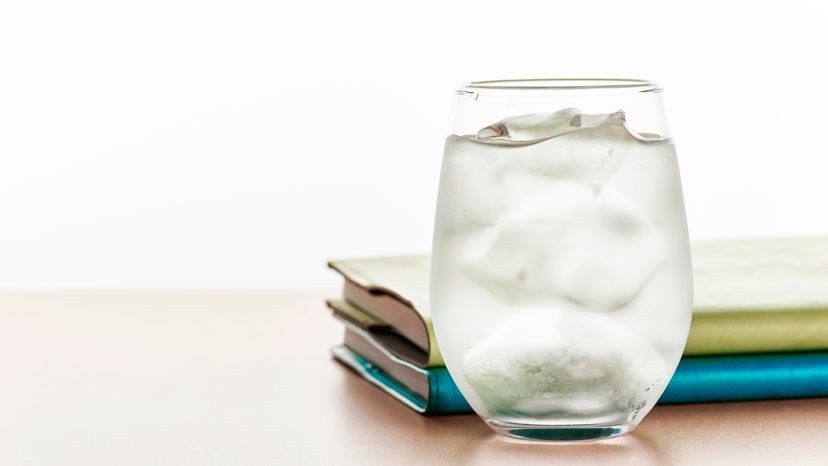
Consider a standard 16-ounce glass of ice water. That is approximately 473 grams of liquid. To raise 473 grams of water from 0 to 37 degrees Celsius requires 17,508 tiny calories. Convert that to dietary Calories (dividing by 1,000), and you are left with 17.5 Calories.
Seventeen point five Calories.
That is less than a single small apple. It is a fraction of the sugar in your morning coffee. In the context of a 2,000-Calorie daily diet, burning 17.5 Calories is statistically negligible. Unless your urine is coming out ice cold (which would be a medical emergency), your body is definitely doing the work. But the “work” is tiny.
Scaling Up: The Eight-Glass Rule
Dietitians often recommend eight 8-ounce glasses of water a day. Let’s run the numbers on that. Sixty-four ounces of water weighs about 1,892 grams. Warming all of that from freezing to body temperature requires roughly 70,030 tiny calories.
That equals 70 Calories burned per day.
Over a year, that adds up. 70 Calories a day is about 25,550 Calories annually. Since a pound of fat is roughly 3,500 Calories, the math suggests you could lose about 7 pounds a year solely from drinking cold water instead of warm water.
Is that worth it? It’s free. It’s healthy. Hydration supports metabolism, skin health, and cognitive function. But it is not a shortcut. If you eat an extra slice of pizza, you have undone an entire year’s worth of “ice water weight loss.”
The Verdict on Cold Water and Weight Management
The idea that drinking ice water creates a massive calorie deficit is a misconception fueled by confusing units of measurement. Your body does burn energy to warm up fluids. It is a fact of thermodynamics. However, the amount is so small that it cannot drive significant weight loss on its own.
“While you definitely shouldn’t depend on ice water consumption to replace exercise or a healthy diet, drinking cold water instead of warm water does, in fact, burn some extra Calories!”
Think of it as a bonus. If you are already trying to lose weight, substituting warm water for ice water gives you a tiny boost. It does not grant you a license to eat poorly. It does not substitute for cardiovascular exercise. It is a minor metabolic nudge, not a engine.
You don’t need to chug ice water to see results. You don’t need to suffer through freezing sips if you dislike the sensation. The most effective way to manage weight remains consistent, sustainable habits: balanced nutrition and movement. The cold water is just a side note.
If you are looking for more deep dives into the science of your body and diet, check out related guides on how calories actually work, where weight goes when you lose it, and the real health impacts of bottled vs. tap water.