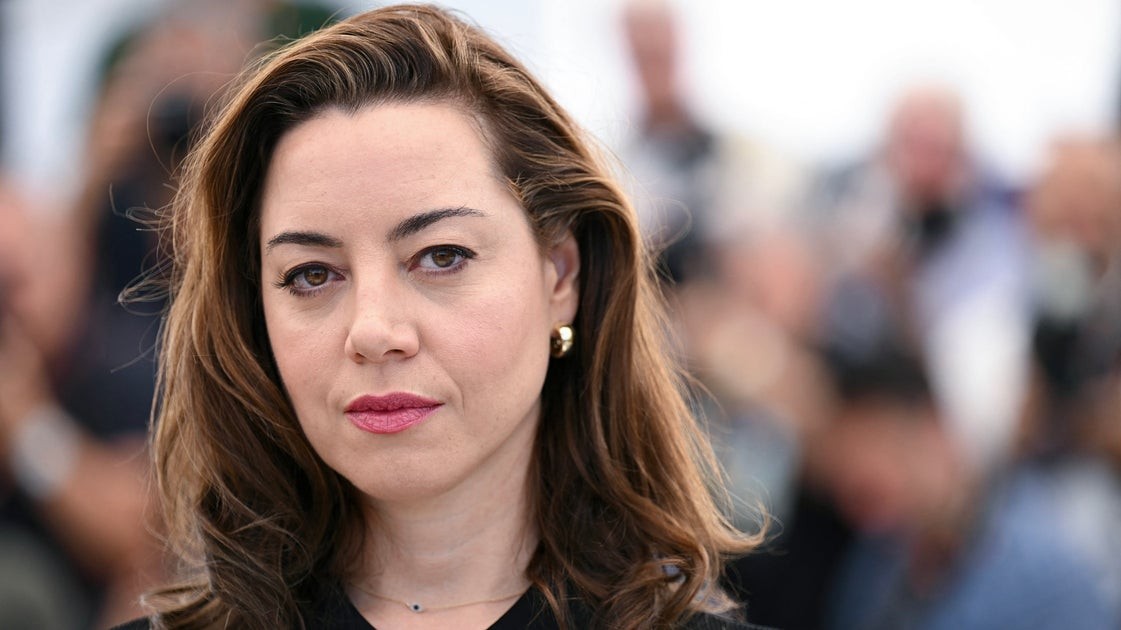
The news that actress Aubrey Plaza is expecting a child with partner Christopher Abbott has ignited a polarizing debate on social media. While the announcement marks a new chapter in Plaza’s life, it has also triggered a wave of public scrutiny regarding the timing of her new relationship.
Following the death of her husband, Jeff Baena, by suicide in 2025, many observers have taken to platforms like X (formerly Twitter) to criticize the speed at which Plaza has moved forward. These reactions highlight a persistent, often harsh, social expectation regarding how long a person should remain in a state of visible mourning.
The “No-Win” Scenario for Widows
The backlash against Plaza is part of a broader trend where widows are often trapped in a psychological “double bind.” According to Anita Coyle, host of the “Widow We Do Now?” podcast, young widows face impossible standards:
- If they date early: They are accused of not truly loving their late partner.
- If they stay single: They are criticized for being “stuck” in their grief and failing to move on.
This judgment suggests that society often uses a widow’s dating life as a “litmus test” for the validity of her previous marriage. Interestingly, Coyle notes that the pressure is not uniform; she has faced the opposite criticism, with people questioning why she has not dated since her husband passed in 2019.
Stigma and the Nature of Loss
The complexity of public judgment is further intensified by the circumstances of a partner’s death. Because Baena died by suicide—a death often carrying social stigma—survivors face even more intense scrutiny.
Licensed clinical counselor Elishia Durrett Johnson explains that because suicide is not viewed as a “natural” death, the public feels a heightened, albeit misplaced, sense of authority to police how the survivor grieves. This creates an environment where the surviving partner is judged not just on their actions, but on the perceived “acceptability” of their loss.
Gendered Expectations in Mourning
There is also a distinct gender imbalance in how society grants “permission” to move on:
- Widowers: Men often receive more leeway and social grace when they find new partners quickly, frequently fueled by the societal narrative that a man “needs a wife.”
- Widows: Women face significantly higher levels of stigma and are expected to adhere to more rigid, formal mourning periods.
Grief counselor Jill Cohen notes that these outdated ideas suggest a widow should “mourn a full season of cycles,” yet there is no biological or psychological rulebook that dictates when a person is “allowed” to find love again.
Navigating the “Ocean of Awfulness”
Plaza herself has spoken candidly about the reality of living with loss, describing her grief as a “giant ocean of awfulness” that is always present, even when she is attempting to move forward.
Experts argue that finding a new partner while navigating such profound loss is not a sign of forgetting the past, but rather a significant feat of emotional resilience. For those who find a partner capable of understanding that “ocean,” the connection can be uniquely powerful.
“She’s experienced this horrendous thing in her life, and she deserves to have a next chapter that makes her happy,” says Coyle.
Conclusion: The public reaction to Aubrey Plaza underscores a societal tendency to police private grief. Ultimately, there is no universal timeline for loss, and the ability of a survivor to find happiness again is a deeply personal journey that exists outside of social expectation.