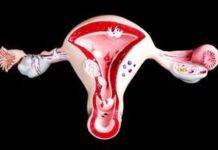
Nearly 6.1 million Americans are navigating infertility. That is roughly 10 percent of men and women of reproductive age struggling to conceive after a year of unprotected sex. The prevalence of this issue has driven a massive industry of fertility treatments. Among these, assisted reproductive technology (ART) stands out. ART encompasses any treatment involving both egg and sperm. The most common form is in vitro fertilization (IVF). In this procedure, fertilization happens outside the body. Doctors then implant the resulting embryo into the uterus, aiming for a viable pregnancy. Other ART methods exist. These include intracytoplasmic sperm injection (ICSI), gamete intrafallopian transfer (GIFT), and zygote intrafallopian transfer (ZIFT).
The timeline for IVF is surprisingly short. Louise Brown, born in England in 1978, was the first “test-tube baby.” Later that same year, another IVF baby was born in India. The term caught on quickly. By 1981, the United States welcomed its first IVF infant. The numbers have only grown since then. According to the Centers for Disease Control, more than 48,000 babies were born via ART in 2003. Ninety-nine percent of those births involved IVF.
Starting with Less Invasive Options
Most people do not jump straight to IVF. If a woman’s fallopian tubes are not severely damaged, she typically tries other treatments first. The approach depends entirely on the root cause. Women might take antibiotics, fertility drugs, or prescription hormones to boost pregnancy chances. Surgery can resolve structural issues in the uterus or tubes. Men have options too. Medication can increase sperm production. Antibiotics and hormones are also used. Simple lifestyle changes matter. Wearing looser underwear helps. Avoiding hot showers and saunas can protect sperm quality.
When to Consider Artificial Insemination
If those steps fail, the next tier is often artificial insemination. This can involve sperm from a partner or a bank. The sperm is manually placed into the uterus or fallopian tubes. A specific version is intrauterine insemination (IUI). Here, a catheter delivers the sperm directly into the uterus. This gives sperm a head start toward the egg. It is a bridge between basic treatments and full IVF.
Why IVF Is the Standard Choice
IVF usually becomes the default when other methods fall short. It is the go-to solution for low sperm count. It works for blocked or damaged fallopian tubes. Endometriosis is another condition where IVF often provides relief. People turn to it when time is running out or simpler paths have closed off.
The In Vitro Process
Understanding the general landscape helps. But the mechanics of IVF are where the real details lie. How exactly does an egg meet sperm in a lab? What happens after fertilization? The specifics of the IVF cycle are complex. They require precise timing. They demand medical expertise. We will break down the fertilization process next. You need to know what happens inside that petri dish. It is not magic. It is biology, carefully managed.
The Real Cost of Trying
Let’s be honest: nothing worth having comes easy, and IVF is the definition of hard work. You’re looking at a four-to-six-week commitment per cycle, plus a price tag that usually hovers around $12,000. And even if you shell out that money, success isn’t guaranteed. The odds shift dramatically depending on your age. If you’re under 35, your chance of a live birth sits between 30 and 35 percent. Drop into the 35-to-40 bracket, and that number plummets to 20-25 percent. Over 40? You’re fighting a steep uphill battle with only a 6 to 10 percent chance per cycle.
It’s a lot to carry. But if you choose to walk this path, it happens in five distinct steps.
Stimulating the Ovaries
The process starts with ovarian stimulation. You’ll take fertility drugs for about eight to 14 days. Why? Because nature usually gives you one egg per cycle. IVF needs multiples. These hormones push your ovaries to produce several eggs at once. It’s a gamble, really. Some will fertilize, some won’t, and some might not develop normally even if they do. Your doctor monitors this closely with ultrasounds and blood tests to catch the exact moment the eggs are ready for retrieval.
Retrieving the Eggs
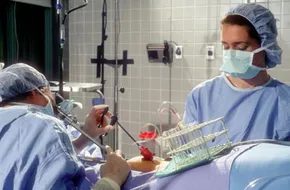
Once the timing is right, it’s time for the procedure. Usually, doctors perform a transvaginal ultrasound aspiration. It sounds intense, but it’s relatively simple. You get a mild sedative, and the doctor uses an ultrasound to locate the mature follicles. Then, a needle goes in to suck out the eggs.
If the ovaries aren’t accessible that way, they might switch to laparoscopic surgery. That involves a small incision in the abdomen and a fiber-optic lens to find the ovaries. It’s still a short procedure, but you’ll need stronger anesthesia.
Insemination and Waiting
After the eggs are out, doctors sort through them. They pick the ones with the most potential and place them in a culture medium. Meanwhile, the father’s sperm is processed. They isolate the most motile sperm—the “best swimmers”—and add them to the eggs in an incubator. Then, you wait.
Fertilization and Growth
Fertilization usually happens within hours. The next day, doctors look for pronuclei. These are the signs that a sperm has penetrated an egg. They unite to form the zygote’s nucleus, which starts dividing.
- Day 2: You’ll see a two- to four-cell embryo.
- Day 3: It’s a six- to ten-cell embryo.
- Day 5: If it survives this long, it’s a blastocyst. It has formed a fluid cavity, which is essential for creating fetal tissues and the placenta.
Not everyone gets to see a blastocyst. Many embryos are transferred earlier, anywhere from one to six days after fertilization. Most clinics keep them for two to three days just to check if development is normal.
Moving to the Uterus
About two to three days post-fertilization, the embryo—or embryos—is ready for transfer. Doctors put them in a drop of fluid, suck that into a thin, flexible tube called a catheter, and guide it through the vagina, past the cervix, and into the uterus.
You’re asked to lie still for an hour or two. No stress. No sudden movements. Just rest. If the embryo implants in the uterine wall, you might get a positive pregnancy test.
Of course, this whole process carries risks. We’ll look at those in the next section.

The process isn’t just one big leap. It’s a series of distinct steps, each carrying its own specific set of physical realities. You need to know what the body is actually going through.
Ovarian Stimulation Risks
First, there’s the stimulation phase. Ovaries get pumped with hormones to produce multiple eggs. For nearly 30 percent of women, this triggers ovarian hyperstimulation syndrome, or OHSS. That’s the medical term for when ovaries swell and become painful.
Mild cases are common. They usually resolve on their own if you’re not pregnant. You might just need over-the-counter pain relievers and some serious rest. Your body handles it.
But it can go further. Moderate OHSS is less frequent. Here, fluid starts building up in the abdominal cavity. You’re dealing with heartburn, gas, nausea, vomiting, and a complete loss of appetite. It’s uncomfortable. It’s draining.
Then there’s the severe end of the spectrum. Only 1 to 2 percent of patients reach this stage. This is where hospitals get involved. Symptoms hit hard: sudden, excessive weight gain from fluid retention, severe abdominal pain that makes you vomit, and shortness of breath. It’s serious. It requires immediate medical intervention.
The Procedure: Retrieval Realities
Once the eggs are ready, they have to be retrieved. The method dictates the risk profile.
Most clinics use transvaginal ultrasound aspiration. It’s minimally invasive. But it still carries small risks of bleeding and infection. On rare occasions, the needle can damage nearby structures like the bowel or bladder. It’s a mechanical risk in a delicate area.
If you undergo laparoscopy instead—less common now, but still an option—the risks shift toward general surgery complications. You’re looking at anesthesia risks. Difficulty breathing. Chest infections. Allergic reactions to the drugs used during the procedure. Nerve damage. These are the stakes of any surgical intervention, even a minor one.
Multiple Pregnancies and Ectopic Risks
Here is where things get complicated emotionally and medically.
If more than one embryo is transferred, you are gambling on a multiple pregnancy. Twins. Triplets. Some couples see this as a win. More children. Done with the struggle. But biologically, it’s a higher-risk scenario for both the mother and the fetuses.
Premature delivery is the most common outcome. The babies may arrive too early to survive comfortably. Complications after birth are more likely. The body wasn’t necessarily designed to carry multiples to full term, especially after IVF manipulation.
Then there’s the silent threat: the ectopic pregnancy. About 5 percent of IVF pregnancies end up ectopic. The fertilized egg implants outside the uterus, usually in the fallopian tubes. It cannot survive. It cannot be moved. It has to be destroyed immediately to prevent rupture and severe internal bleeding. It’s a heartbreaking complication that happens without much warning.
Other Assisted Reproductive Technology Treatments
If you are navigating the complex landscape of fertility treatments, it is easy to assume that In Vitro Fertilization (IVF) is the only game in town. It isn’t. While IVF grabs the headlines, a suite of other Assisted Reproductive Technology (ART) methods exists for different biological realities and personal preferences. Understanding these alternatives can help you have a more informed conversation with your specialist.
Gamete Intrafallopian Transfer (GIFT)
Gamete intrafallopian transfer is essentially IVF’s older, more invasive cousin. The mechanics are similar: eggs are retrieved and mixed with sperm. But instead of watching fertilization happen in a petri dish, the mixture is immediately placed back into your fallopian tubes.
The fertilization occurs inside your body. This distinction matters to some patients. It eliminates the moral or ethical dilemma of deciding which embryos to freeze and which to discard, a common stressor in standard IVF. The embryo develops naturally in its preferred environment.
There are significant trade-offs, however. GIFT requires laparoscopic surgery to access the fallopian tubes. You also cannot visually confirm that fertilization has actually taken place. If it doesn’t work, you are left wondering if the egg and sperm never met. Because of this uncertainty and the surgical requirement, GIFT is rarely an option for women with damaged fallopian tubes. It currently accounts for only about 2 percent of all ART procedures in the United States.
Zygote Intrafallopian Transfer (ZIFT)
ZIFT sits somewhere between GIFT and IVF. It is even rarer, comprising just 1 percent of ART cases. In this scenario, fertilization happens in the lab, just like in IVF. But instead of transferring the resulting embryo into the uterus, doctors use laparoscopy to place the zygote (the fertilized egg) into the fallopian tube.
Why would anyone choose this over IVF? For some, it feels more “natural” to have the embryo implanted in the tube rather than the uterus. It also allows for the confirmation of fertilization before transfer, addressing one of GIFT’s main drawbacks.
Success rates for ZIFT generally lag behind IVF, though they may be higher than GIFT because the lab has already confirmed the egg was fertilized. These procedures are often considered for couples who have tried six unsuccessful intrauterine insemination (IUI) cycles but whose infertility issues aren’t severe enough to warrant immediate, high-intensity IVF.
Intracytoplasmic Sperm Injection (ICSI)
ICSI is not a standalone treatment but an adjunctive technique used in more than 40 percent of all ART procedures. It is specifically designed to overcome male factor infertility.
If sperm count, motility, or morphology is poor, standard IVF fertilization might fail. ICSI solves this by using micromanipulation to inject a single, selected sperm directly into the center of an egg. This bypasses the need for the sperm to penetrate the egg’s outer shell on its own. It is a precision tool for cases where fertilization rates are expected to be low.
Embryo Cryopreservation
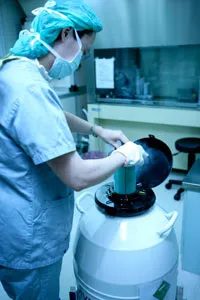
Often overlooked in the initial excitement of treatment, embryo cryopreservation (freezing) is a strategic component of modern fertility care. Embryos created during an IVF cycle can be frozen and stored for years.
This isn’t just about saving spare embryos. It allows couples to skip the physically demanding and expensive steps of egg retrieval and hormone stimulation in future attempts. If the first transfer doesn’t result in a pregnancy, you can thaw and transfer a frozen embryo in a subsequent cycle. It saves money and reduces the bodily toll of repeated invasive procedures.
Choosing the Right Path
None of these alternatives are universally “better” than IVF. They serve different niches. GIFT and ZIFT appeal to those who prefer internal fertilization or want to avoid lab-based embryo selection. ICSI is the go-to for significant sperm issues. Cryopreservation is the practical safety net that makes repeated attempts feasible.
Success rates vary. IVF remains the most successful and widely used method because it offers the highest control and visibility. But for the right candidate, with the right history and values, one of these other options might align better with your body and your beliefs.
The landscape of fertility treatment is vast. If you are just starting to explore these options, resources from the American Society for Reproductive Medicine (ASRM) and the CDC provide data-driven guides on selecting a program. Local clinics often have specific protocols that vary based on your unique diagnosis.
It is a lot to process. You are balancing biology, ethics, finance, and hope. There is no single right answer, only the answer that fits your specific situation. Keep asking questions. Keep reading. The path forward is rarely a straight line.