You know the drill. You polish your nails a deep, midnight blue, scrub them raw with acetone, and still, a faint purple ghost remains. That is standard staining. It’s annoying, but it’s superficial. A quick swipe with a base coat or a gentle buffing fixes it. But what if you haven’t worn polish in weeks? What if the dark tint is already there?
Sometimes, it’s just biology. If you have deeper skin tones, the nail bed naturally reflects more pigment. If you’re exceptionally pale, the contrast might make them look lighter, or sometimes oddly grayish depending on the light. Hit a hard run, get your heart pumping, and that rush of oxygenated blood can make your nails look vibrant pink. Even the seasons play a role. Your thumbnails grow the slowest. Your middle fingers shoot out the fastest. And let’s be honest: they grow faster in the heat of summer than the chill of winter.
But more often, nail color is a mirror. It reflects your lifestyle, your diet, and your health. Dark or discolored nails aren’t just aesthetic quirks. They can be early warning signs of a vitamin deficiency or a medical condition that needs attention. Before you blame the polish, check the source.
Is a Vitamin Deficiency Making Your Nails Dark?
Dietary choices matter, whether you are vegan, vegetarian, or just a salad person. You might be facing a protein challenge. Animal products contain all the essential amino acids your body needs to repair and maintain itself. Plant-based sources like nuts, grains, and seeds are viable, but they require strategy. Without careful monitoring, skipping animal protein can lead to deficits.
Vitamin B12 is the big one. It is abundant in meat and dairy but scarce in plants. A B12 deficiency does more than just make you tired or lightheaded. It can cause bleeding gums and constipation. But on your hands, it shows up differently. Dark nails. Nails that curve oddly. If you notice your nails turning gray or brownish, and you eat little to no animal products, it could be B12.
Dark nails or unusual curvature can be an early indicator of a vitamin B12 deficiency, especially if accompanied by fatigue or other systemic symptoms.
This isn’t always straightforward. That dark coloration can also signal an underlying illness, particularly if it appears suddenly. Look for other red flags: thickened nails, concave shapes (like a spoon), or nails lifting away from the bed. If you have yellowish nails instead, check your zinc and iron levels. Deficiencies in these minerals change the hue, too.
Smoking and the Yellow-Brown Tint
If you have been smoking for years, you probably expect yellow fingers. The nicotine and tar leave a residue that is hard to scrub off. But the discoloration on your nails goes deeper than surface grime.
Cigarette smoke wafts up from your fingers, yes. That contributes a yellow cast. But the real culprit is internal. Smoking restricts blood flow. Your nails stop receiving the proper nutrition they need to stay healthy and clear. The result is a yellowish-brown tint that polish barely covers.
This is not just an unsightly side effect. Poor circulation means your nails are vulnerable. Without adequate blood supply, they are prime targets for fungal infections. The color is a symptom of neglect. If your nails look yellow and brittle, it is time to look at your lungs too.
When Dark Nails Signal a Medical Condition
We’ve covered vitamins. We’ve covered smoking. But what if neither applies?
Dark nails can be a symptom of a medical condition you should address sooner rather than later. The key is context. Is the darkening recent? Is it accompanied by pain, thickening, or separation from the nail bed? These are not normal variations. They are signals.
While natural skin tone affects nail appearance, a sudden shift in color is rarely just “how you were born.” It is a change. And changes in the body deserve investigation.
Growth Patterns and Hidden Clues
You might not realize it, but your fingernails grow out at different speeds. Your thumbnails grow the slowest, and your middle fingers grow the fastest. This variation can make discoloration appear more prominent on some fingers than others. If you are monitoring a potential deficiency or condition, track which nails are affected. Is it all of them? Just the thumbs?
Summer brings faster growth. Winter brings slower growth. If the darkening appears and disappears with the seasons, it might be circulation-related, tied to temperature changes and blood flow. If it persists year-round, the cause is likely internal.
Pay attention to the texture as well. Smooth, even nails are generally healthy. Thickened nails, concave shapes, or lifting from the bed are abnormal. When combined with dark pigmentation, these physical changes point toward systemic issues rather than local trauma.
If you have dark nails,
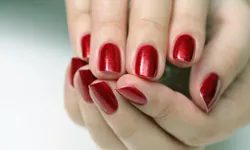
You might look at your hands and see nothing wrong. That murky blue tint, the faint brown smudge, or the yellowing under the cuticle? You’ve likely shrugged it off as part of your baseline. Maybe you’ve had them this way for years. Maybe you just think this is what your nails do.
But here is the hard truth: biological normalcy doesn’t care how long you’ve been used to a symptom. A long-standing change in nail color isn’t just a quirk. It’s a signal.
Doctors don’t just look at your skin or listen to your heart. They look at your digits. Nails are windows into systemic health. A shift in pigmentation—whether it’s a darkening, a yellow hue, or a two-toned pattern—can point to issues ranging from minor fungal infections to serious internal conditions.
Don’t Hide the Evidence
If you have a check-up scheduled, do this one thing: stop painting your nails.
Think about it. How can a dermatologist or primary care physician assess the true state of your nail bed if it’s covered in opaque polish? You aren’t trying to trick them. You’re just protecting your comfort. But you need to give them a clear view. Bare nails reveal the truth. They show the lunula, the nail plate, and the skin around the fold.
This isn’t about inducing panic. It’s about accuracy. Nail changes are non-specific. A single symptom like discoloration can appear in dozens of different conditions. Some are harmless. Some require immediate treatment. The difference lies in the details only a professional can see.
Listen to Your Digits
We often ignore the periphery of our bodies. We focus on the big symptoms—the fever, the pain, the fatigue. But the extremities speak quietly. They whisper before they scream.
If you’ve noticed a persistent change in color, shape, or density, don’t wait for it to become a “major” problem. Seek a professional assessment. It’s better to get a clean bill of health than to miss a subtle indicator of something deeper.
Your hands have been talking to you. Are you ready to listen?