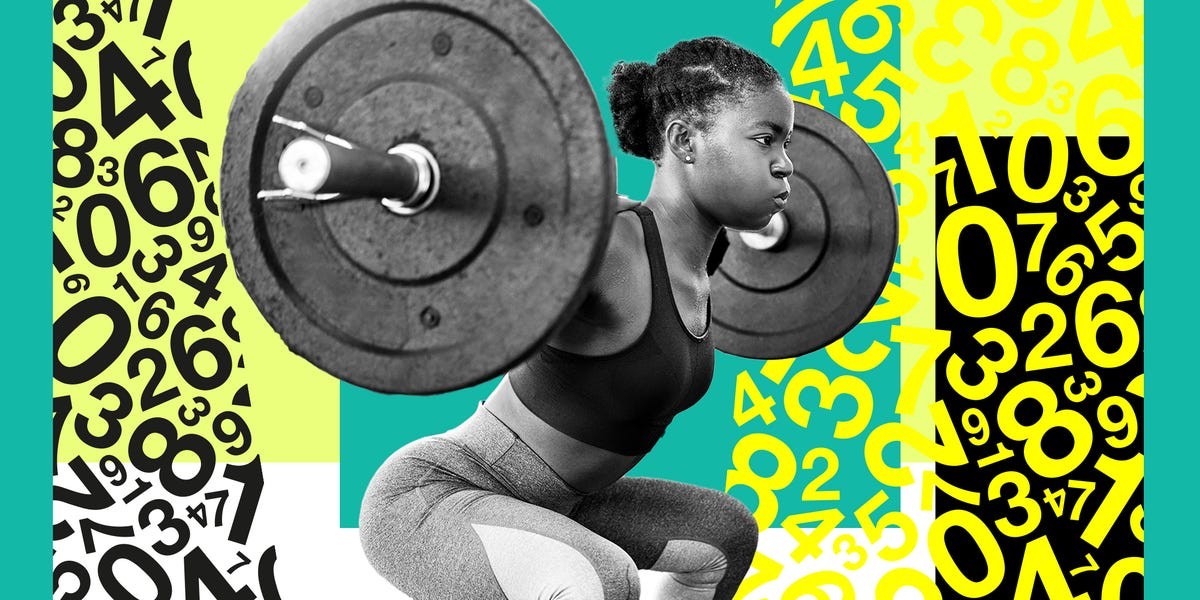
If you have ever felt defeated because you couldn’t hit your target of 10 reps—falling short at 6 or 7 instead—you are not alone. In the fitness world, there is a long-standing belief that specific rep ranges dictate specific results: low reps for strength, medium reps for muscle growth, and high reps for endurance.
However, emerging research suggests that this rigid thinking might be doing more harm than good. The secret to progress may not lie in the number on your tracker, but in the intensity of your effort.
Challenging the Traditional Rep Ranges
For decades, the “rules” of hypertrophy (muscle growth) and strength training have been categorized as follows:
– 2–6 Reps: Primarily for power and maximal strength.
– 8–12 Reps: The “sweet spot” for hypertrophy (muscle size).
– 12–20+ Reps: Focused on muscular endurance.
While these guidelines provide a helpful framework, they are not absolute laws. A study published in the Journal of Science and Medicine in Sport recently challenged these boundaries. Researchers compared two groups performing lower-body exercises over six weeks: one group performed 10 reps per set, while the other performed 20. Both groups worked until concentric failure —the point where they could no longer complete the “up” portion of the movement.
The findings were striking: despite the difference in rep counts, both groups saw comparable improvements in muscle size, strength, and oxygen efficiency.
The Common Denominator: Training to Failure
The reason both groups saw similar results is found in a single factor: effort.
The study suggests that the specific number of repetitions is less important than how close those repetitions bring you to your physical limit. This is supported by a 2024 meta-analysis, which concluded that muscle growth (hypertrophy) is most effective when sets are taken close to failure.
In short: A set of 6 heavy reps performed with high intensity can be just as effective as a set of 15 lighter reps, provided both push the muscle to its limit.
How to Train Effectively Without Risking Injury
While “training to failure” is the key to progress, it does not mean moving recklessly. Pushing too far can lead to injury, which halts progress entirely. The goal is to reach technical failure, not absolute physical collapse.
1. Watch Your Form, Not Just the Weight
Technical failure occurs when your form begins to break down—for example, when your back rounds during a deadlift or your knees cave during a squat. You should stop your set the moment you can no longer perform the movement with perfect mechanics.
2. Use the “Rep Speed” Test
Since it is difficult to monitor your own form in real-time, use speed as your guide. As you approach true fatigue, your movement should naturally slow down. If your final two or three reps take significantly longer to complete (e.g., a 3–4 second ascent in a squat), you are likely hitting the optimal level of intensity.
3. Embrace Flexibility
Your strength levels will fluctuate daily based on sleep, stress, and nutrition. Instead of forcing yourself to hit a rigid number, aim for a rep range.
– On high-energy days: Choose heavier weights and aim for the lower end of your rep range.
– On low-energy days: Choose lighter weights and aim for the higher end.
The Takeaway: Your workout program should be a guide, not a rigid law. Focus on choosing weights that genuinely challenge you and prioritize the quality of each movement over the total number of reps completed.
Conclusion: Results in the gym are driven more by the intensity of your effort than by strict adherence to rep counts. By focusing on technical failure and adjusting to your body’s daily needs, you can achieve significant gains without the stress of hitting arbitrary numbers.