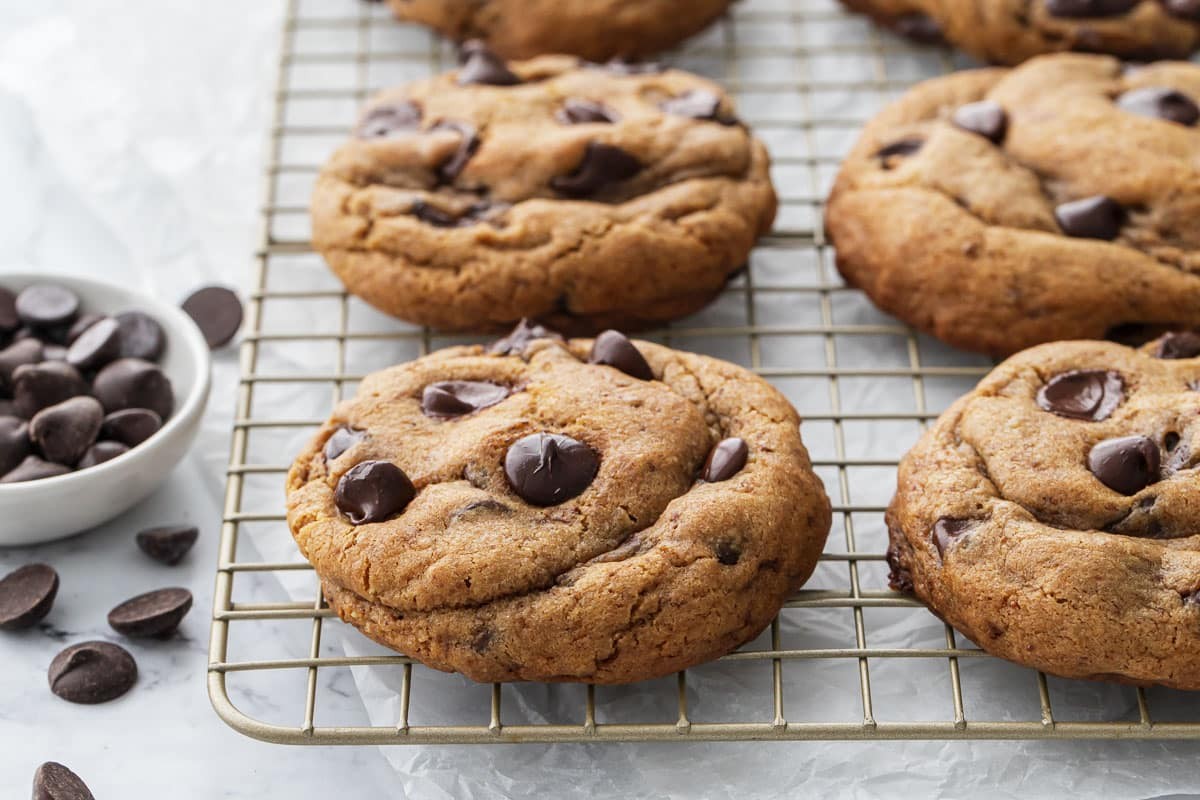
Achieving the perfect chocolate chip cookie is a culinary balancing act. Most recipes fall into one of two camps: thin and crispy, or cakey and soft. However, there is a third, much more coveted category: the bakery-style cookie. These are thick, plush, and almost fudgy in the center, while maintaining a crisp, chewy edge.
Through rigorous testing and precise chemical adjustments, this recipe moves beyond the standard chocolate chip cookie to create something much more substantial—a “lush” experience defined by deep, toasted flavors and a heavy, decadent texture.
The Science of Flavor: Why Brown Butter Matters
The cornerstone of this recipe is brown butter (beurre noisette). Unlike standard melted butter, browning involves cooking the fat until the water evaporates and the milk solids undergo the Maillard reaction. This process transforms the butter from a simple fat into a complex ingredient with nutty, toasted notes.
To elevate this effect even further, this recipe employs two “secret” flavor enhancers:
– Dry Milk Powder: Adding milk powder increases the concentration of milk solids. This results in more “brown bits” during the browning process, intensifying the toasted flavor without requiring extra butter.
– Instant Espresso Powder: This does not make the cookie taste like coffee. Instead, it acts as a flavor booster, deepening the profiles of both the chocolate and the brown butter, much like salt enhances savory dishes.
Engineering the Perfect Texture
A great cookie isn’t just about taste; it is about the structural integrity of the crumb. To move away from a “cakey” texture and toward a “fudgy” one, several key adjustments were made:
- The Fat-to-Liquid Ratio: Because browning butter removes its natural water content, a small amount of milk is added back to the recipe. This prevents the cookies from becoming overly greasy or dry.
- Cornstarch Integration: By adding cornstarch, the protein content of the flour is effectively reduced, resulting in a much more tender, melt-in-your-mouth texture.
- The “Snowman” Technique: Rather than rolling dough into simple spheres, the dough is shaped into tall, “snowman-like” mounds. This verticality ensures the center remains thick and gooey, while the weight of the dough prevents excessive spreading.
- The Role of Sugar: The use of dark brown sugar provides more moisture and a deeper molasses profile than light brown sugar, contributing to the cookie’s rich color and chew.
Customizing Your Cookie Size
This recipe is highly scalable, but the baking time and “mouthfeel” change significantly depending on how much dough you use per cookie.
| Cookie Weight | Description | Recommended Bake Time |
|---|---|---|
| 50g | Standard medium size; results in a round, puck-like cookie. | 10–11 minutes |
| 75g | A satisfyingly large, substantial cookie. | 14–15 minutes |
| 100g | The Ideal Size. Massive, bakery-style, and perfect for sharing. | 15–16 minutes |
| 150g | “Monster” style (Levain-style); very thick and dense. | 16–18 minutes |
Pro-Tips for Success
💡 Chill the Dough: For the best results, shape your dough balls and chill them in the refrigerator for at least two hours, or ideally overnight. This allows the fats to solidify, preventing the cookies from spreading too thin.
- Watch the Heat: When browning butter, use a light-colored pan so you can monitor the color changes. Once the milk solids turn golden brown, remove the pan from the heat immediately to avoid burning.
- Freezing Options: You can freeze shaped dough balls before baking (reduce oven temp to 325°F and bake for 18–20 mins) or freeze fully baked cookies for later enjoyment.
- Butter Choice: While standard American unsalted butter works, using European-style salted butter provides a superior, richer flavor profile that complements the dark chocolate.
Conclusion: By combining precise ingredient ratios—like cornstarch and espresso powder—with the Maillard reaction of brown butter, you can move past basic home baking to create professional, heavy-weight cookies that are both structurally impressive and deeply flavorful.