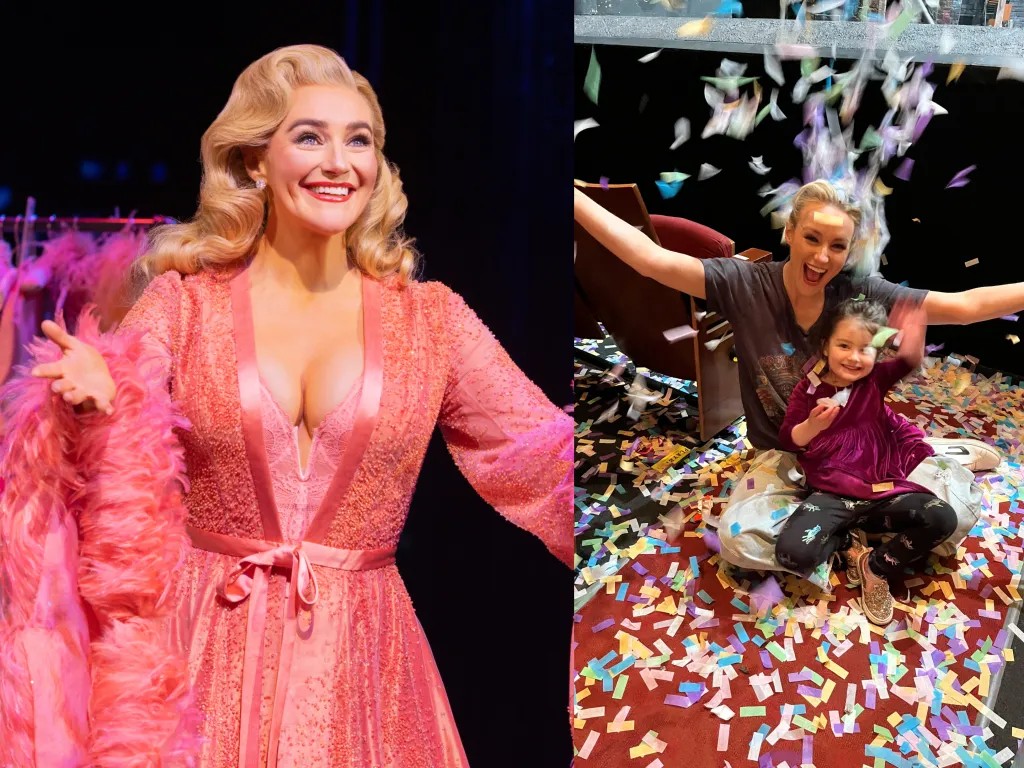
The rigorous schedule of a Broadway performer is already demanding, typically involving two shows on “double” days. For Betsy Wolfe, star of the hit musical Death Becomes Her, the routine is even more intense: she often performs the role of Madeline Ashton three times a day. The third performance? A non-ticketed, private rendition for her five-year-old daughter, Poppy, at home.
This anecdote encapsulates the central challenge—and triumph—facing the new generation of Broadway mothers. During a recent “Moms on Broadway” panel at the Museum of Broadway, Wolfe joined fellow industry veterans to discuss how they navigate the intersection of high-stakes theater and parenting. The conversation revealed a shift in perspective: rather than viewing motherhood as a career hindrance, these women argue it enhances their artistic depth and resilience.
Redefining Balance
Wolfe, 43, is no stranger to acclaim. Her resume includes Tony-nominated roles in & Juliet, Joy, and Waitress. Yet, she rejects the conventional notion of “work-life balance.”
“I don’t believe that there is such a thing as true balance,” Wolfe said. “You make choices, right? And then there are consequences to your choices.”
For Wolfe, the strategy is intentional prioritization. On Wednesdays, when she has both a matinee and an evening show, she ensures her afternoons off are filled with high-quality time and trusted caregivers. The goal isn’t perfection, but presence.
The physical toll is real. Wolfe admitted to crashing on the couch after a particularly exhausting week that included eight performances at the Lunt-Fontanne Theatre and a late-night opening night event elsewhere. While she didn’t enjoy sacrificing her night off, she recognized that her body’s need for rest was a signal she couldn’t ignore.
Integrating Work and Family
A recurring theme among the panelists was the rejection of keeping professional and personal lives strictly separate. Instead, they advocate for integrating their children into the fabric of their careers.
For choreographer Lorin Latarro, making her 10th Broadway credit with Chess, the rehearsal schedule is a blessing. With tech rehearsals typically running from 11 a.m. to 4 p.m., she enjoys what she calls “magic time.” She can take her eight-year-old daughter, Arden, to lunch, tuck her in for a nap, and return to work while the child sleeps.
“I feel like you get the best of both worlds,” Latarro explained. “People probably assume that you don’t see your kid a lot, and I feel like I see my kid all the time.”
Tess Soltau, who plays Daisy Buchanan in The Great Gatsby, echoed this sentiment. With her two-year-old daughter, Ava, not yet in school, Soltau finds herself seeing her child constantly. However, she admitted that on double-show days, skipping the break between performances to stay with her daughter is often the better choice, despite the fatigue.
Wolfe takes this integration further by including Poppy in her daily routine. Whether it’s a morning rehearsal or a home performance, Wolfe ensures her daughter feels included in her world. This approach dispelled Wolfe’s earlier fear that motherhood would shrink her professional horizons.
“I could not do what I do onstage if I didn’t prioritize my kid,” Wolfe said. “In a way that makes me an even better performer and actor. The fact that I prioritize my daughter is actually what makes me happy.”
Setting Boundaries and Expectations
While embracing integration, the panelists were clear about maintaining healthy boundaries regarding their children’s potential futures in the industry. Wolfe noted that Poppy is now the same age as Lulu, the daughter character in Waitress. When asked if she would let Poppy play the role, Wolfe replied, “If she wanted to,” emphasizing that she refuses to be a “stage mother” like the character Mama Rose in Gypsy.
Latarro shared a similar philosophy. While she encourages Arden to learn piano and dance—viewing music as a vital language—she acknowledges the industry’s inherent instability.
“I would never stop her, but I’m certainly no stage mother,” Latarro said. “The business is full of heartbreak, pain, ups and downs, and magnificent highs.”
A New Model for the Industry
The presence of these mothers on stage serves as a powerful example for younger performers. Kaleigh Cronin, who is pregnant with her first child and previously understudied leads in Death Becomes Her, cited Wolfe and Latarro as inspirations.
“I’ve had the privilege of seeing their daughters backstage and witnessing you being incredible mothers, making me confident enough to think I can do this too,” Cronin said.
Wolfe also looks to established Tony winners like Stephanie J. Block, Kelli O’Hara, and Laura Benanti as role models who successfully navigate public life while protecting their children’s privacy. She notes the delicate balance of sharing their lives with the world without exposing their children to the spotlight.
Ultimately, the conversation highlights a broader trend in Broadway: the dismantling of the myth that parenthood and a leading career are mutually exclusive.
“It was really about: you don’t have to choose between your career and your child,” Wolfe concluded. “Doing both is showing them that you can do it.”
By prioritizing their children without sacrificing their art, these performers are not just surviving the demands of Broadway—they are redefining what it means to be a working parent in the entertainment industry.