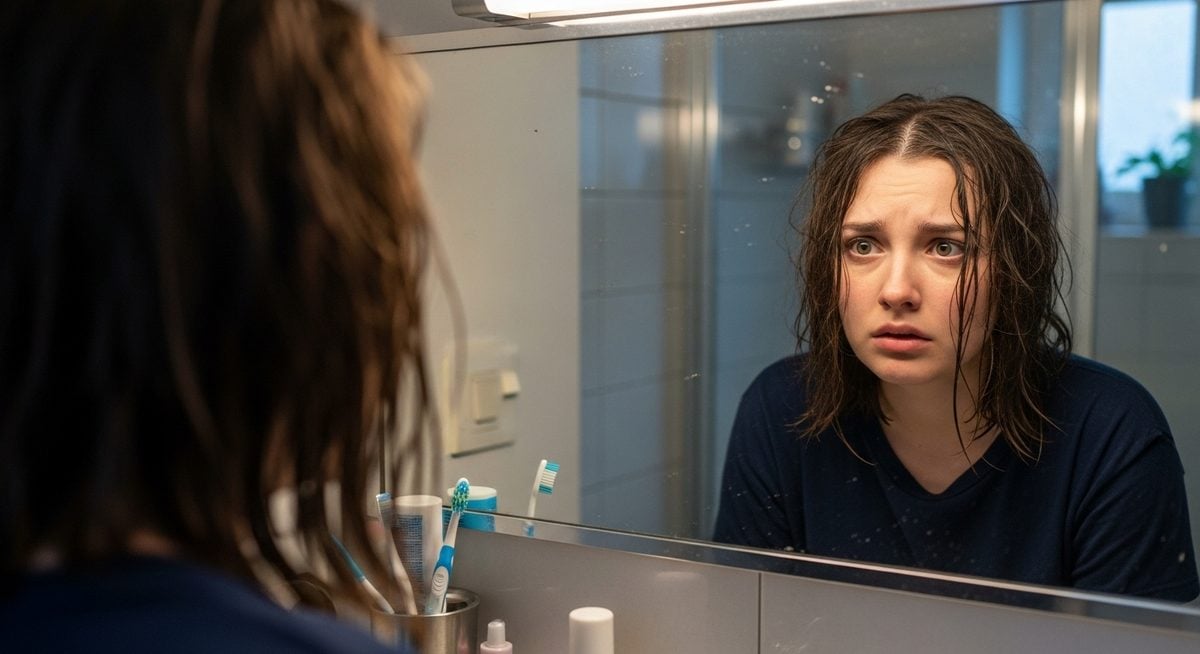
It happens to the best of us. You wash your hair, you feel a pleasant lightness, and the next day it’s already heavy. The roots stick together. It feels heavy, suffocating or just “poor”. Maybe you’re hiding a greasy spot before a meeting, or your morning blowout turns into a complete disaster at lunchtime. It’s annoying. Really.
We often blame pollution. Or a bad shampoo bottle is blamed. But what if the real culprit is sitting in the middle of your living room, your stress levels and your plate? Our standard of living has a lot more impact on our scalp than we think.
Warning signs that your scalp is screaming
Look in the mirror. What do you see? Roots that are greasy just a few hours after washing? Dull lengths? Occasional itching? These are not just distractions. They are signals. The sudden increase in sebum production is no accident. That extra shine, loss of volume, that sticky feeling at the hairline? Your scalp is screaming that it’s fed up. It wants you to listen.
Sometimes, no matter how many “miracle” products you try, the fat remains. It doesn’t matter if it’s dry winter air or if you’re miles away from urban pollution. Your hair seems to be pulling you down. You start touching it nervously. Keep the headband in your bag just in case. It’s not about hygiene anymore, it’s about self-confidence. And that’s important.
Sleep, stress and inner chaos
Of course, external products are important. But the reason for greasy hair is often internal. Chaotic schedule? Those nights when you sleep less than six hours? Secondary urban stress that never completely goes away? These things mess with your natural sebum production.
When you’re exhausted, you’ll notice. Flat hair is more common. Fat burns faster. When you’re tense, your scalp feels more sensitive and may even itch. Hormonal microfluctuations, regulated by mood and rest cycles, play an important role. Neglecting the sleep cycle or constantly submitting to pressure can weaken the scalp’s protective barrier. This creates a feedback loop of imbalance. It’s hard to ignore how much your circadian rhythm affects what goes on in your head.
Food: silent ally or silent saboteur?
We underestimate nutrition. Much. Consuming foods that contain a lot of fat, sugar or heavily processed ingredients can cause visible sebum overproduction in less than a week. It’s not magic; It’s biology.
On the other hand, some people find that their hair changes after a few days of eating simpler, “home-cooked” meals – more fiber, quality vitamins, good lipids. It regains its luster. It gets fat much slower. People talk about “hair detoxes”, but they are not mystical. It’s just a matter of adjusting your diet to support the scalp’s natural balance. The connection between your plate and your hair shows in small ways: a fresher feel at the roots, a healthier feel, less artificial shine.
Routines: When the wrong way makes the situation worse
Here’s the hard truth: washing your hair too often or using harsh exfoliating products makes the problem worse. Your scalp feels attacked and reacts by producing more sebum to protect itself. This is the rebound effect.
Your daily gestures matter. Water too hot? Strong towel rubbing? Dirty hair accessories? Leftovers from styling products? Every detail affects this. Try to get rid of just one bad habit. Maybe space out your washes. Maybe rub your scalp lightly with your fingertips instead of digging in with your fingernails. Maybe switch to a natural bristle brush. These small changes can give your hair roots room to breathe.
Skip the wonders of “quick cleaning”. They rarely have a long-lasting effect. Consistency and gentleness are better. See how your skin reacts. Adjust accordingly.
Medication and hormonal changes
Sometimes life throws a curveball. Certain medications or treatments can indirectly affect the condition of the scalp. You may experience sudden dryness or, paradoxically, sudden hair that becomes greasy and difficult to style. It’s not unusual. It’s not a reason to panic, but it’s something you should be aware of.
Pay attention to these variations. If they persist, discuss them with your doctor. You may need to adjust your routine. Don’t blame yourself for temporary changes in appearance. Lightening this mental burden will help more than you think.
Observe, Understand, Adapt
Over time, small signals don’t lie. Changing eating habits. Prioritize rest. Slowing down. It helps. You may notice that your hair becomes supple and light again.
It’s not about banning certain gestures. It’s about accepting that your lifestyle and your hair are closely related. It is a chain of microgestures. Adjustments to your routine. Listen carefully to your skin. Excessive sebum is usually caused by a trio: diet, stress management and hair care routines.
Understanding these factors will help you clean more than just your hair. It eases your daily burden. It restores confidence. Self-compassion becomes the most powerful beauty secret of all. But balance? It’s never really finished. It’s just something you keep adjusting day by day.