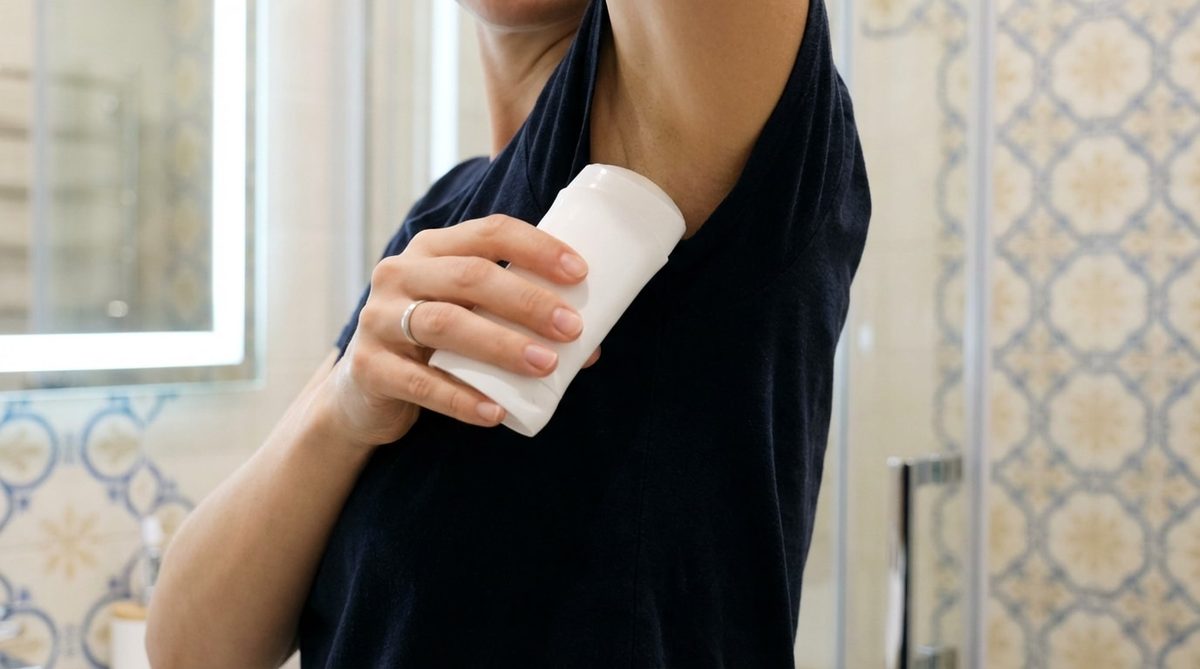
You know the drill. The alarm sounds. Quick coffee. Rush to get dressed. Just before you put your shirt on, spray something under your armpits. It’s muscle memory. It’s been your ritual since you were young. But despite the stiffness in the morning, by 2pm you still have faint yellow circles on your shirt or a sticky feeling. Why does the one method that should keep you safe all day fail so consistently?
Derm’s opinion on bathroom mistakes
It’s not just about you. The frustration of losing the freshness of the morning before lunch is always present. In the spring, when the temperatures rise and the fabric layers retain heat, this fault is felt even more acutely. You use the product believing that you are safe. The body disagrees. The discomfort forces you to fold your arms and hide the stains on your blouse. There is a logical fallacy in this busy routine. It ignores how our skin actually works.
Dermatologists see this every day. When patients ask about sweat control, they often describe their morning spray. The doctor usually smiles. Why? Because applying deodorant in the morning is a battle against your body’s natural clock. You try to stop sweating just as your metabolism wakes up and gets ready for action. The product immediately loses its effectiveness. The fix is not more product. It is changing the timing.
This is how your skin rests at night
To do it right, you need to understand the night shift. When you go to sleep, your body goes into recovery mode. Your core temperature will slowly drop. This tells your organs to rest. Your skin, your body’s largest organ, gets the memo. Evaporative cooling is not necessary. Metabolism slows down. This creates a silent window. Now is the perfect time for every treatment to work smoothly.
Sweat glands, the little factories that pump fluid to the surface, go into standby mode. They stop producing sweat. That’s the key. If you carry out the treatment during this break, the active ingredients can settle in. A continuous flow of liquid will not wash them away. Night time provides a quiet area to prepare shelter for the next day.
Dry skin is a real need
Think about your morning shower. The bathroom is steamy. Your skin is moist. Even after drying, residual moisture remains. As soon as you move, your body warms up again. Spraying deodorant on damp, warm skin is like putting a bandage on ice. Moisture acts as a barrier. The active substances cannot attach to the epidermis. Sweat begins to percolate, even microscopically. It pushes the product off the surface before it can do any good.
Postpone this to the evening. Apply after nightwear. Allow your skin to dry completely. Without this moisture protection, the product comes into direct contact with the skin. This liability is non-negotiable. It maximizes every drop you use. It is effective. It is environmentally friendly. You waste less. They buy less. The protective layer melts into the skin’s protective layer throughout the night. It forms an invisible protective shield. When morning comes, this protective shield is already there.
The logic is simple, but we ignore it. We treat deodorant like perfume – the last touch before we leave. But it’s more than a drug. It takes time to work. It needs a dry surface. The body must be calm. If you want the summer heat to stop affecting your comfort, start changing your routine tonight. The results may surprise you. Or maybe they’re just dry. This is exactly what you wanted in the first place.
The science of absorption
Here is the part of the beauty science most people miss. Most everyday antiperspirants don’t work instantly. That quick dry spray you slap on before rushing out the door? It’s mostly masking the smell. The real work happens slowly. Aluminum salts need time. They need to sink deep into the skin to reach the sweat ducts themselves.
Think about your body at night. Your glands are resting. Your skin is dry. This is the perfect window. The active ingredients have hours to travel down those tiny tunnels without rushing. It’s a slow, gentle descent that matches your body’s natural sleep rhythm. You aren’t forcing anything. You’re letting physiology do the heavy lifting.
Creating the microscopic barrier
Once those chemicals reach the ducts, something interesting happens. They crystallize. They form tiny, temporary plugs. These aren’t harmful. They are simply physical barriers sitting at the surface of your pores. This fine mesh is what limits sweat the next day.
By creating this blockage before you even start your day, you treat the problem at the source. The product works harder while you sleep. Those micro-plugs have time to settle and harden. They aren’t washed away by morning sweat or stress. They stay put. They are ready for your commute, your meetings, or your workout.
The morning shower test
Does washing your face or body in the morning wash away all that hard work? It’s a fair question. The answer is no. Once the formula has done its job overnight, it becomes remarkably tenacious.
Your morning shower removes the excess product sitting on the surface of your skin. It leaves you feeling clean and fresh. But the ingredients that migrated into the pores? They stay. The friction of soap and the splash of warm water won’t dislodge them. The protection holds. It lasts through spring sun or the sprint for the bus.
Masking vs. Blocking
It helps to know the difference between what you are buying. The mechanism described above applies to true antiperspirants. These are designed to reduce sweat volume. Standard deodorants work differently. They use alcohol, magnesium, or perfumes to neutralize bacteria and cover odor. Those can be applied in the morning on clean skin.
Still, reducing moisture first makes a huge difference. Less sweat means fewer bacteria. Fewer bacteria mean fewer odors. Anticipating your body’s reactions is simply the most sustainable strategy. It’s not about hiding the scent. It’s about changing the environment where the scent is born.
Flipping the routine
Changing a habit that has stood for decades takes a little effort. But the payoff is real. Letting science work while you sleep frees up precious minutes in the morning. You stop wasting product on damp skin. You stop hoping a quick spray will stick.
On a practical level, this inversion saves money. You use less product because it works better. It’s also more eco-friendly. Less packaging waste. Less chemical runoff. You gain efficiency, comfort, and a more mindful approach to hygiene. It’s a win across the board.
The peace of mind
Modern life is hot. Office windows trap heat. Thermal regulation is constantly tested. Knowing that protection was methodically installed while you dreamt offers a strange kind of serenity. The anxiety of lifting your arms in a meeting fades. The sticky feeling of fabric against your skin by 5 PM disappears.
Respecting the slow, deep rhythm of your body yields the best results. It’s not magic. It’s biology.
A DIY alternative
If you want to take this further, try making your own protective powder or balm for evening application. It’s a great step toward zero-waste living. It’s easy to mix in your kitchen. You control the ingredients. No hidden chemicals.
- 50 grams of raw shea butter
- 30 grams of coconut oil
- 40 grams of fine baking soda
- 20 grams of cornstarch or arrowroot powder
Transitioning to conscious rituals changes how you think about daily care. By aligning your habits with your body’s biological clock, hygiene becomes logical. It’s no longer a battle. It’s a collaboration.
Your bathroom cabinets might need a rethink. Your body will thank you for adapting to its true needs. There’s always one more tweak to make, one more layer of understanding to peel back. The routine is never really finished.