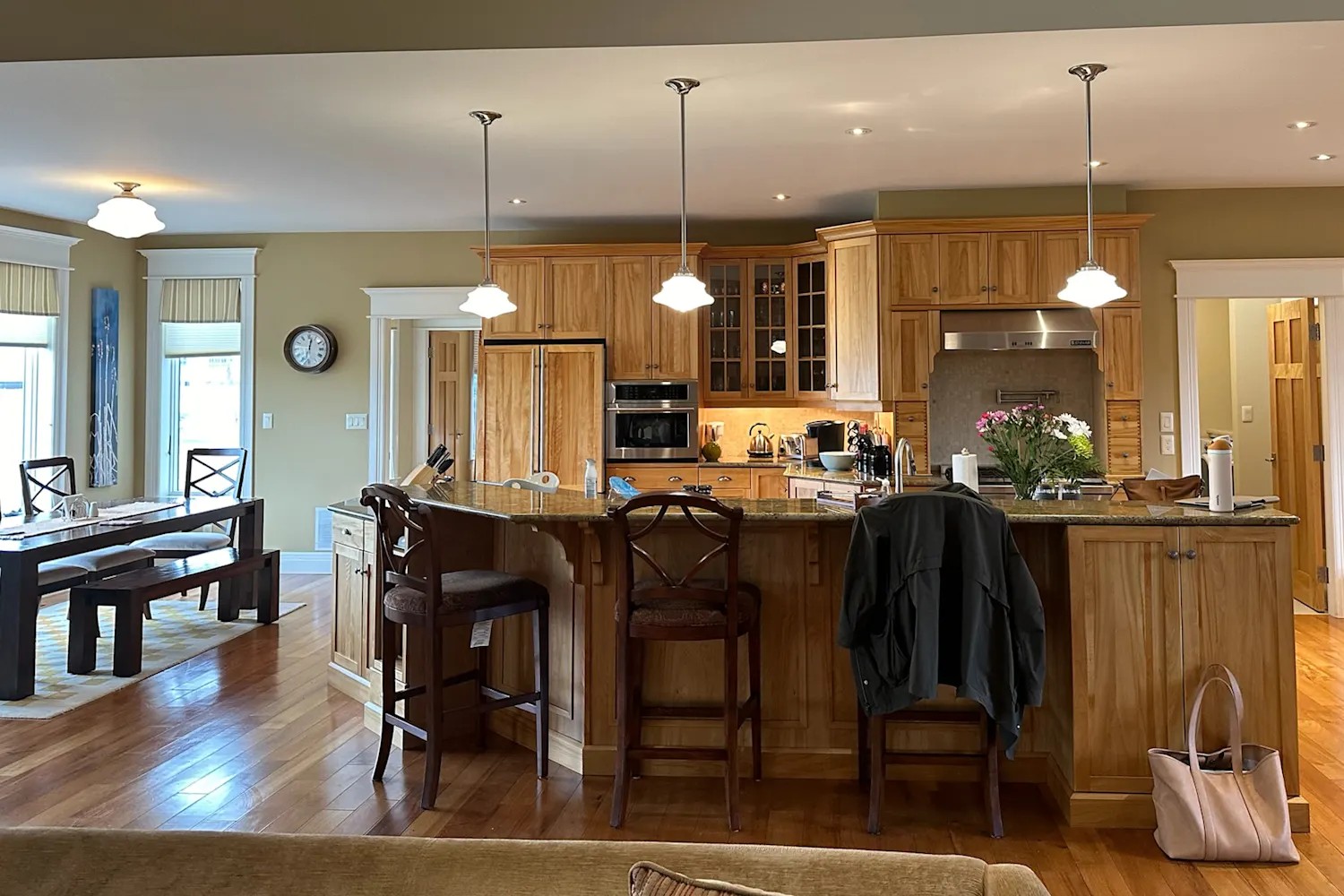
A recent kitchen renovation demonstrates how thoughtful design can transform a space without a complete overhaul. The project focused on harmonizing an open-concept main living area—kitchen, dining, and living room—while maintaining the kitchen’s existing structure. Rather than a full gut renovation, the design team capitalized on high-quality original millwork, adding key details to elevate the aesthetic.
Color Palette and Material Choices
The redesign centered around a fresh color scheme, with the homeowner leaning toward blues. Honed Taj Mahal quartzite was selected for countertops due to its durability and visual appeal, while Farrow & Ball’s “Selvedge” and “Matchstick” shades were applied to the island and cabinetry, respectively. This coordinated approach extended to custom seating: Kravet stools upholstered in a Mulberry blue check fabric, echoing the living room’s color scheme.
Vintage Touches and Seamless Integration
To introduce a vintage feel, the renovation incorporated Zellige tile backsplash and unlacquered brass hardware. A panel-ready refrigerator was installed to provide a seamless look. The design team ensured trim connected visually to the ceiling, enhancing the kitchen’s overall cohesiveness.
Project Timeline and Outcome
The renovation took seven months, with the final result exceeding expectations. According to the designer, the homeowner now uses the kitchen as the central hub for gatherings, proving that strategic updates can revitalize a space without extensive reconstruction.
The success of this project highlights how targeted design changes—color, materials, and refined details—can create a high-impact transformation. The renovated kitchen not only meets the homeowner’s aesthetic preferences but also reinforces the importance of functional design in modern living spaces.