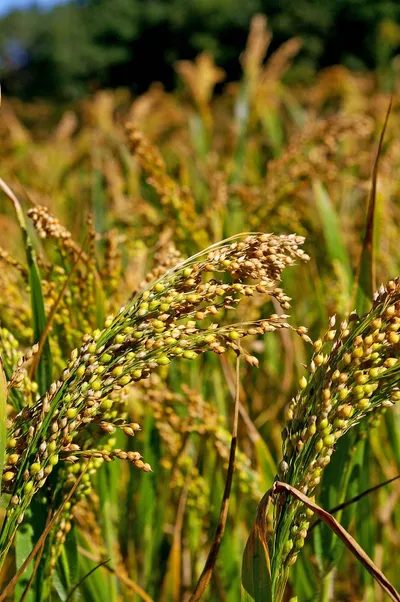
It wasn’t always about aesthetics or gluten-free trends. Millet has been sitting in our pantries for thousands of years, quietly feeding civilizations while other grains battled for supremacy. These tiny seeds of the Poaceae family are not new to history. They have been cultivated in Asia and Africa for over 4,000 years. In fact, they were an important staple in Europe during the Middle Ages, long before wheat and rye took over the story.
Today the story changes. In the United States and Western Europe, millets are mostly relegated for pasture or hay production. You might see them in a bird seed mix or a horse feed bag. But worldwide, especially in developing countries, they are still an important food source.
Why the sudden spotlight?
Because they are tough. Millets don’t care if the temperature rises or rainfall patterns become strange. They thrive in conditions where other crops fail. This resilience makes them an effective tool against food insecurity. The United Nations Food and Agriculture Organization has recognized this potential and declared 2023 as the ‘Year of Millet.’ It was not just a marketing gimmick. It highlighted their crucial role in stabilizing global food supply, especially in regions like India and sub-Saharan Africa, which are on the front lines of climate change.
Even if you may not be eating millet for dinner tonight, know that these tiny seeds are working hard in some of the world’s most vulnerable areas. They are not just a backup plan. They are a survival strategy. And as the climate continues to change, their importance only grows.

Why millet is suitable for the modern diet
When you try millet for the first time, don’t expect it to taste like regular white rice. There is something special about these little grains. They are naturally high in carbohydrates, making them a solid source of energy, but the protein content is no joke either. The protein content is 6-11 percent, depending on the variety. The fat content is lower and is 1.5-5 percent. It’s a lean, hearty staple.
The flavor profile is different. Some describe it as earthy, others say it has a slightly nutty tone that can border on strong. Because of this strong flavor, it doesn’t always work well as a neutral background for every dish. Instead, it shines when it plays a specific role.
How to cook and eat millet
You don’t always find millet on the plate next to grilled chicken. It’s more versatile, but requires a bit of intentionality. Traditionally, it is ground into flour for flatbreads. Think dense, savory flatbreads that you can find in many international cuisines. This texture holds up well and absorbs sauces without falling apart.
As a whole grain, it is often cooked in the same way as rice. Boil, steam or use the absorption method. Result? A grain that can be loose or slightly chewy depending on how long you let it cook. Some people like it porridge style, cooked until soft and creamy. It is soothing, warm and easy to digest.
Because the flavor is stronger than rice, it goes well with strong ingredients. Spices, herbs and acidic elements like lemon or vinegar help cut through the earthiness. If you’re used to mild grains, trying millet for the first time might surprise you. But once you get used to its nature, it becomes a reliable workhorse in the kitchen.
What is millet suitable for?
Millet is not just an ancient grain that has been left in the history books. It is still a staple food in many parts of the world, especially in areas where climatic conditions make it difficult to grow other crops. There, it’s not trendy superfood, it’s food. And that’s a good thing. It is inexpensive, shelf-stable and nutrient dense.
For the modern home cook, millet offers a break from the usual rice-quinoa loop. It offers variety. It adds texture. And if you’re watching your carb intake, it’s worth noting that while it’s high in carbs, its protein content gives it more nutritional weight than many other grains. It’s not a panacea, but it’s a good choice for anyone looking to diversify their pantry.
The most important thing is to treat it with respect. Don’t undercook it into a mush, and don’t forget its taste. Lean into it. Use in flatbreads. Make it into a hearty porridge. Or just cook it like rice and stand out on its own. It is a cereal that demands a little attention, but it will rewards you with substance.
Size: shape and flexibility
Most millet varieties are annual plants whose plant height varies from 30 to 130 cm. Think of it as the low-maintenance neighbor of the cereal world. However, pearl millet (scientific name: Pennisetum glaucum) is an exception. The height of the buds is 1.5 meters, sometimes 3 meters, and the thickness of the stem is about 2.5 centimeters. Tall and stocky, they don’t resemble their shorter cousins.
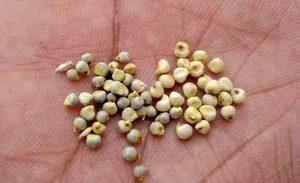
Flowers similarly tell stories about diversity. Some species form spikes or racemes with flowers hanging from stems of the same length on a central axis. Some choose panicles with dense clusters of small flowers. When it comes to seeds, pearl millet is another exception. In most other types, the seeds are trapped in the husk after threshing. Once these husks are removed, the grains are usually milky white.
Why They Thrive Where Others Fail
与主要谷物相比,小米是为了生存而生的。 它们能忍受贫瘠的土壤和干旱条件,that would kill wheat or corn。 你不需要给它们pump肥料或杀虫剂。 它们以令人难以忽视的平静韧性应对恶劣的生长条件。
还有环境红利。 深根品种有助于减少侵蚀。 They hold the ground together,积极帮助缓解脆弱地区的荒漠化。 They aren’t just food; they’re a soil protector.
哪种类型适合您的需求?
选择合适的小米取决于您想要种植或吃的东西。 您是否正在为干旱土地寻找抗旱作物? 或者是适合您厨房的特定质地的谷物? 每种类型都有不同的产量、营养成分和烹饪用途。 了解高大的无壳珍珠粟和较短的带壳品种之间的区别可以改变您的种植和准备方式。
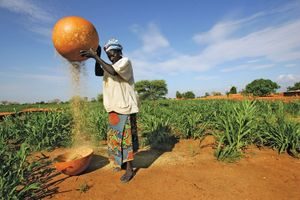
If you’re looking for a grain that thrives when other crops fail, millet is the answer. These are not just trendy superfoods. These are durable staple foods that have sustained humans for centuries.
Consider, for example, pearl millet, known as “bajra” in India. It is the most important grain. It does not require rich soil or sufficient water. This resilience has made it a staple food in India and parts of Africa where the climate is harsh. Small millet (Panicum sumatrense ) also has this niche. In India, it is still primarily a food crop, valued for its ability to grow in marginal conditions.
The fastest growing food and feed options
Not all millets grow slowly. Proso millet (also known as common millet or millet Panicum miliaceum ) is incredibly fast. It only takes 60-80 days from sowing to harvest. This speed makes it popular in bird seed mixes where fast cycling is important.
But this is not just about birds. People in Asia and Eastern Europe eat it as a grain. Elsewhere it is used as cattle feed. It is a versatile crop that can be adapted to different farming systems according to local needs.
Global classic products with regional names
Foxtail millet (Setaria italica ) produces small pointed seeds. In North America and Western Europe, it is often grown as animal hay. But things changed when we went across the ocean to China and other Asian countries. It is an important source of food there, and it is eaten by humans.
Finger millet (Eleusine coracana ) is equally important in parts of South Asia and Africa. It is an important grain for the nutrition of these regions. At the same time, the Japanese millet (Echinochloa frumentacea ) chose another path. It is mainly grown in Japan and America. Like foxtail, it is grown primarily for hay to feed livestock and not directly for human consumption.
Which millet fits your needs?
Your choice depends on what you want to grow and what you want to eat.
- For low-fertility soil: Pearl millet (bajra ) is a wise choice. It tolerates drought and harsh soil conditions better than others.
- For fast harvest: Proso millet will be delivered within 80 days. If you need a quick answer, this is it.
- Eating in Asia: Foxtail and finger millet are traditional staple foods. They are deeply integrated into the local diet.
- For animal feed: Foxtail and finger millet (western) are grown especially for hay.
Each variety has a specific role. One is not inherently better than the other. Just adapt to different environments and uses. Understanding this difference will change the way you look at grains. They are not just “grains”. They are solutions.
But we often ignore them. When we see wheat or rice, we think of it as “food”. We see millet and think “bird food” and “ancient history”. This disconnect is being closed. As soil health declines and water becomes scarce, the resilience of bajra and proso may become the new norm. Or maybe they’ve always been that way. We just stopped listening.