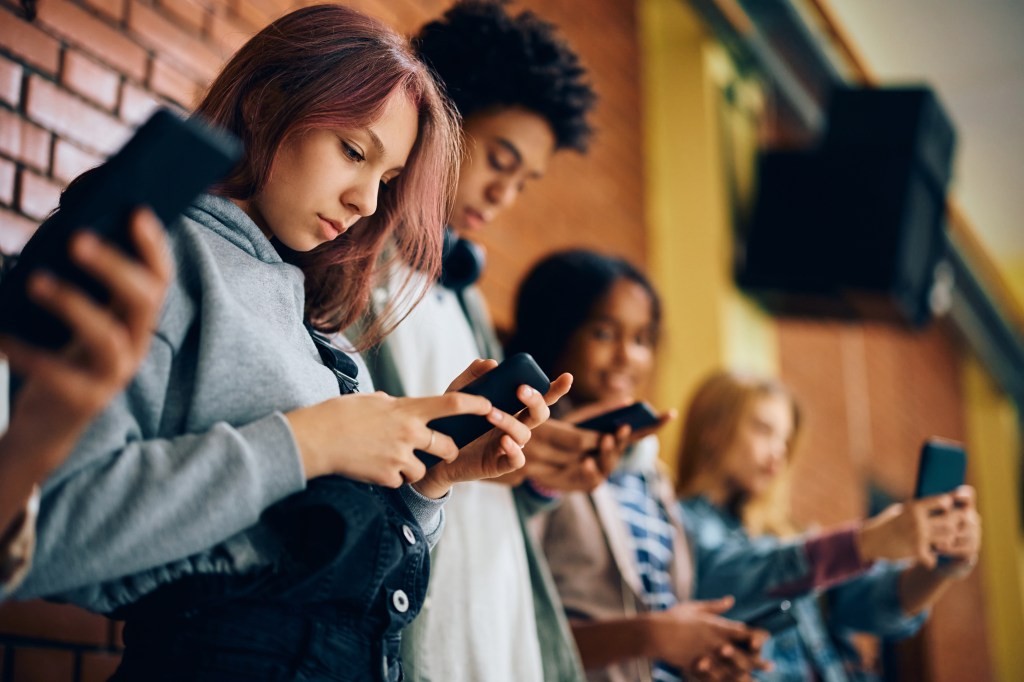
While it is a universal truth that teenagers are deeply immersed in the digital world, their motivations and experiences are far from uniform. A recent study by Pew Research involving 1,458 teens (ages 13–17) reveals that social media usage is not a monolith; instead, it is heavily influenced by race, gender, and platform choice.
The Primary Driver: Entertainment and Connection
Across the board, the motivation for logging on is remarkably consistent. Nine out of ten teens use social media primarily for entertainment. This trend is most pronounced on TikTok, where roughly 80% of users cite entertainment as their main draw.
Beyond passive consumption, social media serves three core functions for the modern teen:
– Maintaining Relationships: Keeping in touch with friends and family.
– Community Building: Connecting with peers who share niche interests.
– Information Gathering: Using TikTok for product reviews and Instagram/TikTok for celebrity news and politics.
While TikTok dominates the entertainment sector, Snapchat serves a more functional, communication-heavy role, with 57% of its users engaging in direct messaging on a daily basis.
Racial Disparities in Platform Engagement
The data highlights significant differences in how Black, White, and Hispanic teens interact with digital content, particularly on TikTok.
Black teens emerge as the most active and news-oriented demographic on the platform. They are significantly more likely to use TikTok as a primary news source (57%) compared to their Hispanic (44%) and White (41%) peers. This trend extends to several other key areas of engagement:
| Feature/Activity | Black Teens | Hispanic Teens | White Teens |
|---|---|---|---|
| Using TikTok for News | 57% | 44% | 41% |
| Product Recommendations | 71% | 59% | 55% |
| Following Celebs/Athletes | 68% | 53% | 51% |
| Daily Posting Frequency | 31% | 17% | 16% |
This suggests that for Black teens, TikTok functions not just as a distraction, but as a vital cultural and informational hub. In contrast, White teens show a different preference for direct communication, with 66% messaging daily on Snapchat, compared to 52% of Hispanic and 37% of Black teens.
Gendered Experiences: Harassment and Self-Perception
Gender plays a critical role in how teens perceive their digital well-being and the risks they face online.
The “Time Trap”
Teen girls appear more acutely aware of their digital consumption habits. 33% of girls report spending too much time on TikTok, compared to 23% of boys. On Instagram and Snapchat, however, both genders feel similarly about their screen time.
Online Safety and Bullying
While both boys and girls report experiencing harassment and bullying at similar rates, the nature of the social friction differs. Teen girls are more vulnerable to rumors, particularly on visual-centric platforms:
– Snapchat: 21% of girls reported rumors being spread about them, compared to 14% of boys.
– TikTok: 12% of girls reported the same, compared to 7% of boys.
This discrepancy suggests that while bullying is a universal issue, the social weaponization of “reputation” and “rumor” disproportionately affects female users.
The Parental Perspective: Sleep and Productivity
Parents remain deeply concerned about the tangible impacts of digital life. The study found that the primary anxieties for parents revolve around the physical and academic well-being of their children:
- Sleep Deprivation: 41% of parents believe social media negatively impacts their teen’s sleep.
- Decreased Productivity: 38% of parents believe it hinders their teen’s ability to stay productive.
Only a small minority of parents (3% for sleep and 10% for productivity) believe social media has a positive impact on these specific areas of life.
Conclusion
The digital landscape is not a level playing field; race and gender significantly dictate how teens consume news, build community, and experience social risks. As platforms continue to evolve, understanding these demographic nuances is essential for addressing both the benefits of connectivity and the growing concerns regarding mental health and productivity.