Cut flowers are a fleeting luxury. They bring immediate joy and freshness to a home, but their lifespan is notoriously short. For many, the rapid decline of a bouquet—often within just a few days—feels like a waste of both money and aesthetic potential.
To determine how to maximize the life of cut blooms, we conducted a rigorous side-by-side test. We compared seven popular preservation methods, ranging from plain water to commercial flower food, to see which truly keeps stems firm and flowers upright. The results reveal a clear winner, but also highlight effective DIY alternatives for those who prefer household ingredients.
The Experiment: Standardizing the Test
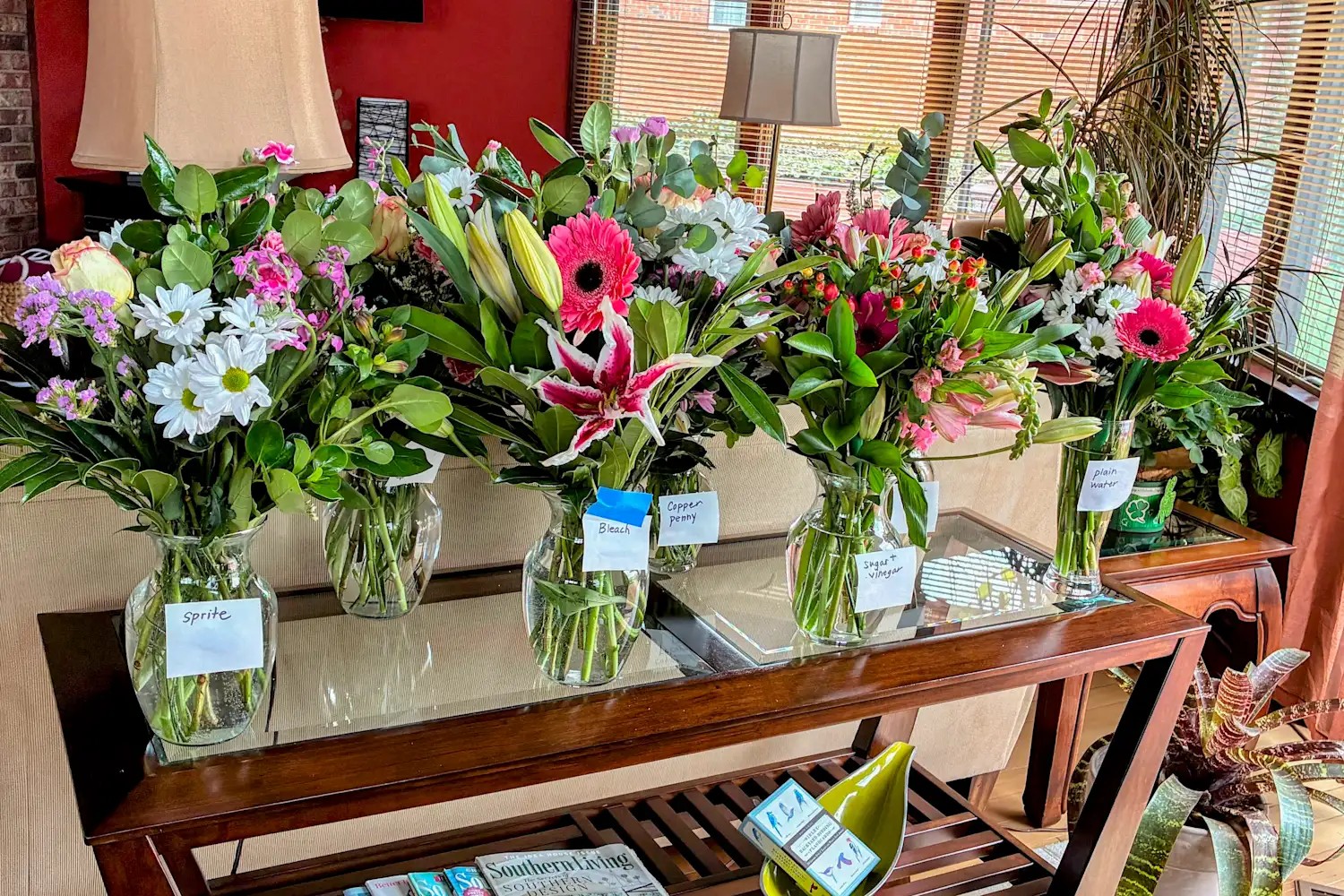
To ensure fair comparisons, we controlled every variable except the additive in the vase. We sourced a bulk box of mixed pink flowers from Costco, including lilies, roses, gerbera daisies, carnations, and white daisies with eucalyptus.
The Setup:
* Preparation: Damaged stems were removed. Each stem was trimmed by 1 inch at a 45-degree angle to maximize water uptake. Leaves that would sit below the water line were stripped off to prevent rot.
* Vases: Seven clean glass vases were filled with 4 cups of room-temperature tap water.
* Environment: All vases were kept in the same room, away from direct sunlight, heat sources, and drafts.
* Duration: We monitored the arrangements daily for one week, tracking water clarity, stem firmness, and flower structure.
The Seven Methods Tested:
1. Plain Water (Control)
2. Commercial Flower Food (One packet per 4 cups)
3. Sprite (½ cup Sprite + 3½ cups water)
4. Copper Penny (One penny in 4 cups water)
5. Vodka and Sugar (1 tsp sugar + few drops vodka)
6. Bleach (¼ tsp bleach)
7. Sugar and Vinegar (1 tsp sugar + 1 tsp white vinegar)
The Results: What Actually Works?
The decline of cut flowers is primarily driven by bacterial growth in the water, which blocks the stems’ ability to drink, and a lack of nutrients. Effective methods must address both issues. Here is how each method performed.
1. Plain Water
Rating: 2/5
Lifespan: ~3 days
As the control group, this method relied solely on the flowers’ residual energy. By day three, the water turned cloudy due to bacterial growth, and the stems softened. Without nutrients or antibacterial agents, the arrangement lost its structure quickly.
2. Bleach
Rating: 2.5/5
Lifespan: 3–4 days
Bleach is a powerful antibacterial agent, but it offers no nutrition. While the water stayed clearer longer than in the plain water test, the stems softened unevenly. Experts warn that bleach can damage stem tissues if the concentration is too high, but even at a low dose, it failed to sustain the flowers because it didn’t feed them.
3. Vodka and Sugar
Rating: 3/5
Lifespan: 3–4 days
This method attempts to combine nutrition (sugar) with an antibacterial agent (vodka). The flowers looked strong initially, but the water turned cloudy by midweek, leading to stem softening. The vodka’s antibacterial properties were insufficient to counteract the bacterial growth fueled by the sugar, resulting in a performance similar to the control group.
4. Sprite
Rating: 3.5/5
Lifespan: ~4 days
Sprite is a popular DIY hack because it contains both sugar (food) and acid (pH balancer/antibacterial). It performed well in the first few days, keeping blooms upright. However, the high sugar content eventually encouraged rapid bacterial growth, causing the water to turn cloudy faster than in other tests. Once the water quality dropped, the stems declined quickly.
5. Copper Penny
Rating: 4/5
Lifespan: 5–6 days
Copper has natural antibacterial properties. In this test, an older penny (pre-1982, which contains more actual copper) kept the water relatively clean and the stems firm for over half a week.
Note: This method is less practical today. Pennies minted after 1982 are mostly zinc with a thin copper coating, which significantly reduces their effectiveness.
6. Sugar and Vinegar
Rating: 4.5/5
Lifespan: ~6 days
This DIY combination mimics the core components of commercial flower food. The sugar feeds the flowers, while the vinegar lowers the water’s pH, creating an environment that inhibits bacterial growth. The water remained clearer than in the Sprite or Vodka tests, and the stems stayed firm for most of the week. This is the most effective household alternative to commercial products.
7. Commercial Flower Food
Rating: 5/5
Lifespan: 7+ days
The commercial packet (in this case, Floralife) was the undisputed winner. It provided a balanced mix of sugar for energy, acid to adjust pH, and biocides to kill bacteria. The water stayed clear throughout the week, stems remained firm, and the flowers retained their shape and vibrancy until the end of the test.
Why Commercial Food Wins: The Science Behind the Bloom
According to Laura Walsh, director of marketing at Smithers-Oasis, a leading floral care company, professional flower food is designed to tackle the three main causes of wilting:
1. Bacteria Control: Keeps the water clean so stems can drink.
2. Nutrition: Provides sugar for energy.
3. pH Balance: Acidifies the water to improve water uptake and inhibit bacteria.
“You’re giving the flowers everything they need at once,” Walsh explains. “That’s why you see them last longer and hold their shape.”
Methods that address only one aspect of this triangle—like bleach (antibacterial only) or sugar (nutrition only)—fail to provide the comprehensive support cut flowers need to survive beyond a few days.
Practical Tips for Longer-Lasting Flowers
Regardless of the method you choose, proper handling is crucial. Even the best flower food cannot save a bouquet if basic care is ignored.
- Change the water regularly: If you don’t use flower food, change the water every two days and re-trim the stems.
- Remove submerged leaves: Any leaf below the water line will rot, introducing bacteria.
- Avoid heat and sun: Keep arrangements away from direct sunlight, heating vents, and ripening fruit (which releases ethylene gas that accelerates aging).
- Know your flowers: Hardier blooms like carnations lasted longer across all methods, while delicate flowers like lilies showed decline sooner once water quality dropped.
The Verdict
If you want your flowers to last the full week, commercial flower food is the best option. It is scientifically formulated to maintain water clarity and stem health simultaneously.
However, if you don’t have a packet on hand, a DIY mix of sugar and vinegar is a highly effective alternative. It provides the necessary nutrition and acidity to extend vase life significantly compared to plain water or single-ingredient hacks like bleach or Sprite.